Dockside Elegance: Enhancing Waterfront Living with IMM Boat Lift Accessories

dockside elegance img

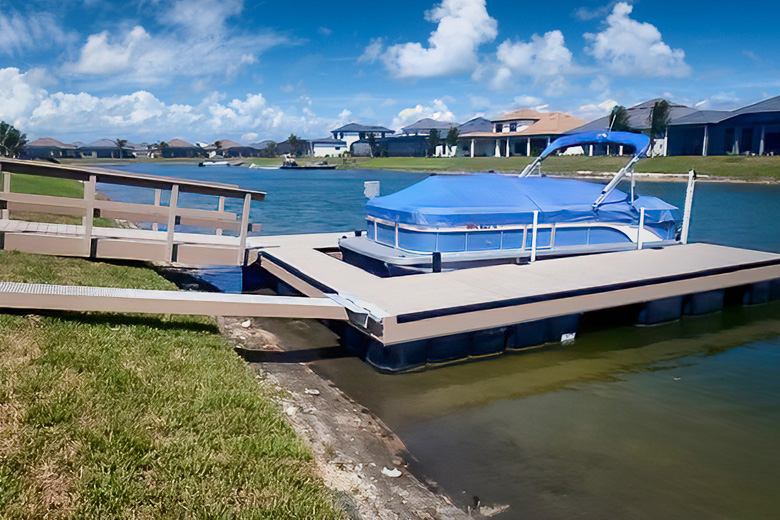
Living by the water is a dream for many, offering serene views, direct access to aquatic activities, and a unique lifestyle. For waterfront homeowners, the inclusion of a boat lift is not just a matter of convenience, but also an opportunity to add a touch of elegance and style to their property. IMM Quality Boat Lifts stand out in this realm, offering not only superior functionality but also contributing significantly to the aesthetic appeal of dockside living.
Dockside Elegance: Enhancing Waterfront Living with IMM Quality Boat Lifts

The Aesthetic Appeal of IMM Quality Boat Lifts

When it comes to waterfront properties, every element counts in creating a harmonious and visually appealing environment. IMM Quality Boat Lifts are designed with this in mind, offering sleek lines and a clean appearance that complements any waterfront setting. Our boat lifts come in a variety of designs and finishes, allowing homeowners to choose a style that best matches their personal taste and the architectural design of their property.

Customization and Design Flexibility for your Boat Lift

One of the key features of IMM Quality Boat Lifts is their customization options. Whether you have a small personal watercraft or a large yacht, these lifts can be tailored to fit your specific needs. The customization goes beyond just size and capacity; it includes a range of materials and colors. This flexibility ensures that the boat lift integrates seamlessly with your dock, enhancing the overall look and feel of your waterfront space.

Durability and Quality

While aesthetics are important, durability and quality are equally vital. IMM Quality Boat Lifts are known for their robust construction and use of high-grade materials, ensuring that they withstand the test of time and harsh marine environments. The quality of these boat lifts means they maintain their appearance for years, contributing to the lasting beauty of your dockside area.

Seamless Integration with Waterfront Landscaping

A well-designed boat lift should complement the surrounding landscape, not detract from it. IMM Quality Boat Lifts are designed to blend in with their environment. Whether your waterfront home features a modern design or a more traditional look, these lifts can be integrated in a way that enhances the natural beauty of the area. This seamless integration is key in maintaining the tranquil and picturesque setting that waterfront living offers.

Enhancing Property Value

Beyond the immediate visual appeal, installing an IMM Quality Boat Lift can also increase the value of your waterfront property. A stylish and functional boat lift is an attractive feature for potential buyers, signaling a well-maintained and thoughtfully designed property. This investment not only improves your current living experience but also pays dividends in the future should you decide to sell your home.

Read more- 10 Reasons to Enhance Your Boat Lift with Accessories.

Safety and Convenience

Aside from the aesthetic benefits, IMM Quality Boat Lifts offer practical advantages. They provide a safe and convenient way to store your boat, protecting it from water damage, algae growth, and potential storm damage. This practicality, combined with the elegant design of the lifts, enhances your waterfront lifestyle, allowing you to enjoy the beauty and recreational opportunities of living by the water with greater peace of mind. Safety Tips: The Proper Way To Operate A Boat Lift .

Creating a Cohesive Look

For those who are attentive to detail, IMM Quality Boat Lifts also offer the opportunity to create a cohesive look along your waterfront. Accessories such as dock lights, stairs, cover heads, beam vs. beamless and railings can be matched with the style of your boat lift, creating a unified and elegant appearance. This attention to detail sets apart your waterfront property as a paragon of dockside elegance.

Ready to Make Your Boatlift Beautiful? IMM Boat Lifts Has Plenty of Options for Making Your Boat Lift Look Amazing.

Powerhead Covers

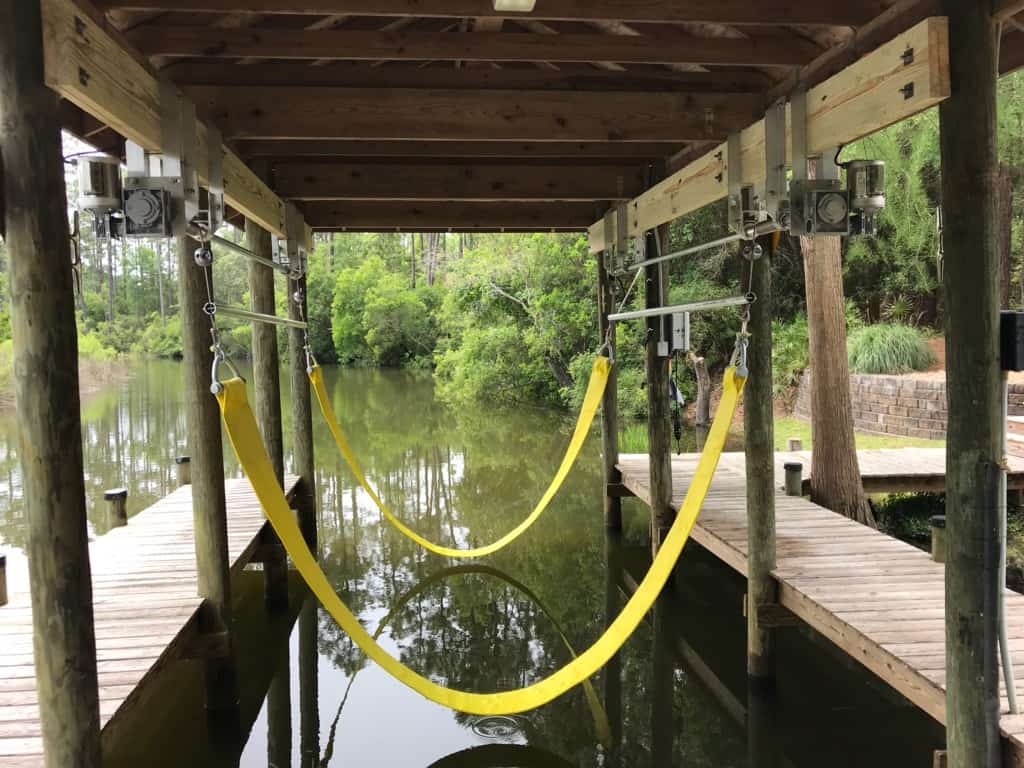
Although the main benefit of covering the powerheads that control your boatlift is to protect and extend the life of your boat lift, these covers can also add a nice aesthetic, turning your dock and lift into a waterfront oasis.
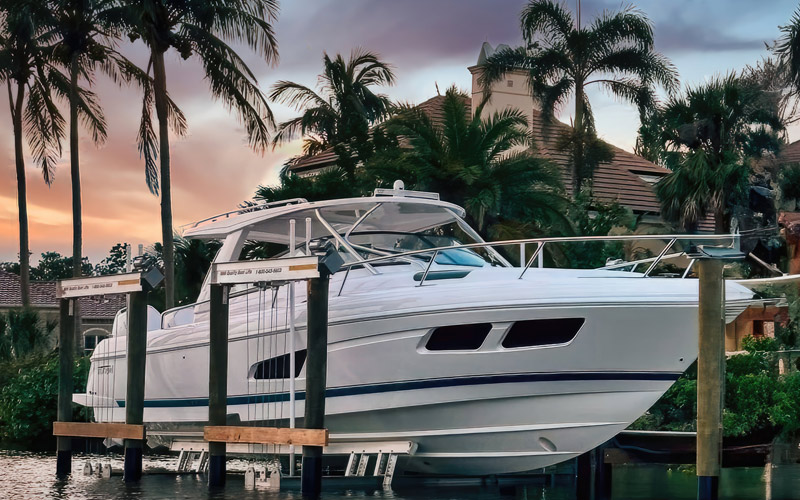
covering the powerheads that control your boatlift is to protect and extend the life of your boat lift, these covers can also add a nice aesthetic, turning your dock and lift into a waterfront oasis.

Boat Lift Styles – Beams vs. Beamless

For those that do not want to obstruct your waterfront views, you can choose a style of boatlift without beams. Top beams can sometimes get in the way of that perfect sunset. Our beamless lifts attach the powerheads to four plings, instead of top beams, so you can still get your watercraft out of the water while enjoying your views. Another option we offer are our elevator lifts since this type of lift doesn’t require pilings at all.
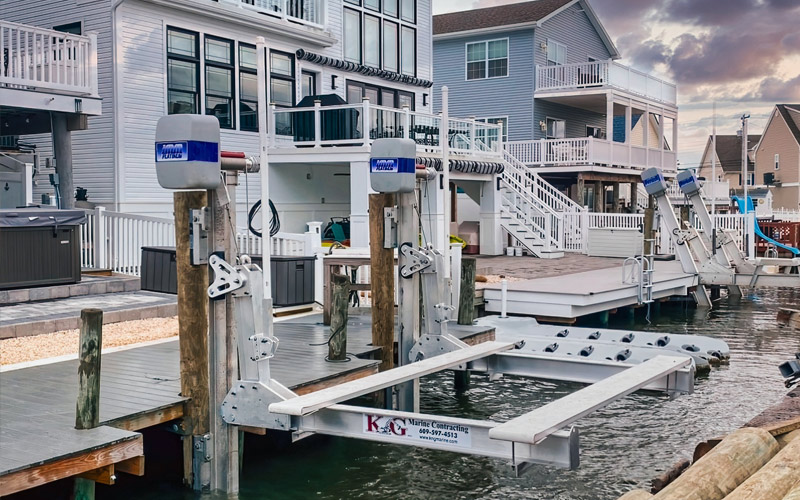
Boat Lift Styles - Beams vs. Beamless

Custom Decking

If you want to blend in the deck to match your boat lift cradle, there are options. We offer a variety of different decking options, so you can match the dock decking for a seamless look. This can be installed using a low-profile method, with the cradle decked over, essentially hiding your boat lift’s top beams.
Custom Boat Lift Decking

Add Color To Our Aluminator Lifts

Using a powder coating technique, you can add color to the aluminum structure of your boat lift. Whether you want to match the color of your boat or home, you can literally send the color code of your choice. In the photo below, you can see how we powder coated the powerheads and cradles white and light blue to match the hull of the boat.

Install a Canopy

Add your own style with a custom canopy for you boat lift. Not only will it protect your boat from elements like the sun, bird poop, rain and other environmental damage, but it also spruces up the look of your lift.
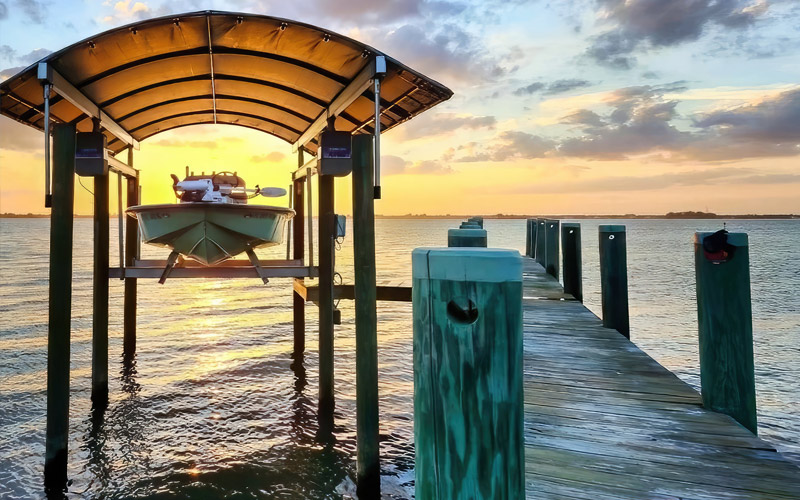
Boat Lift Canopy

Go All Out with a Boathouse

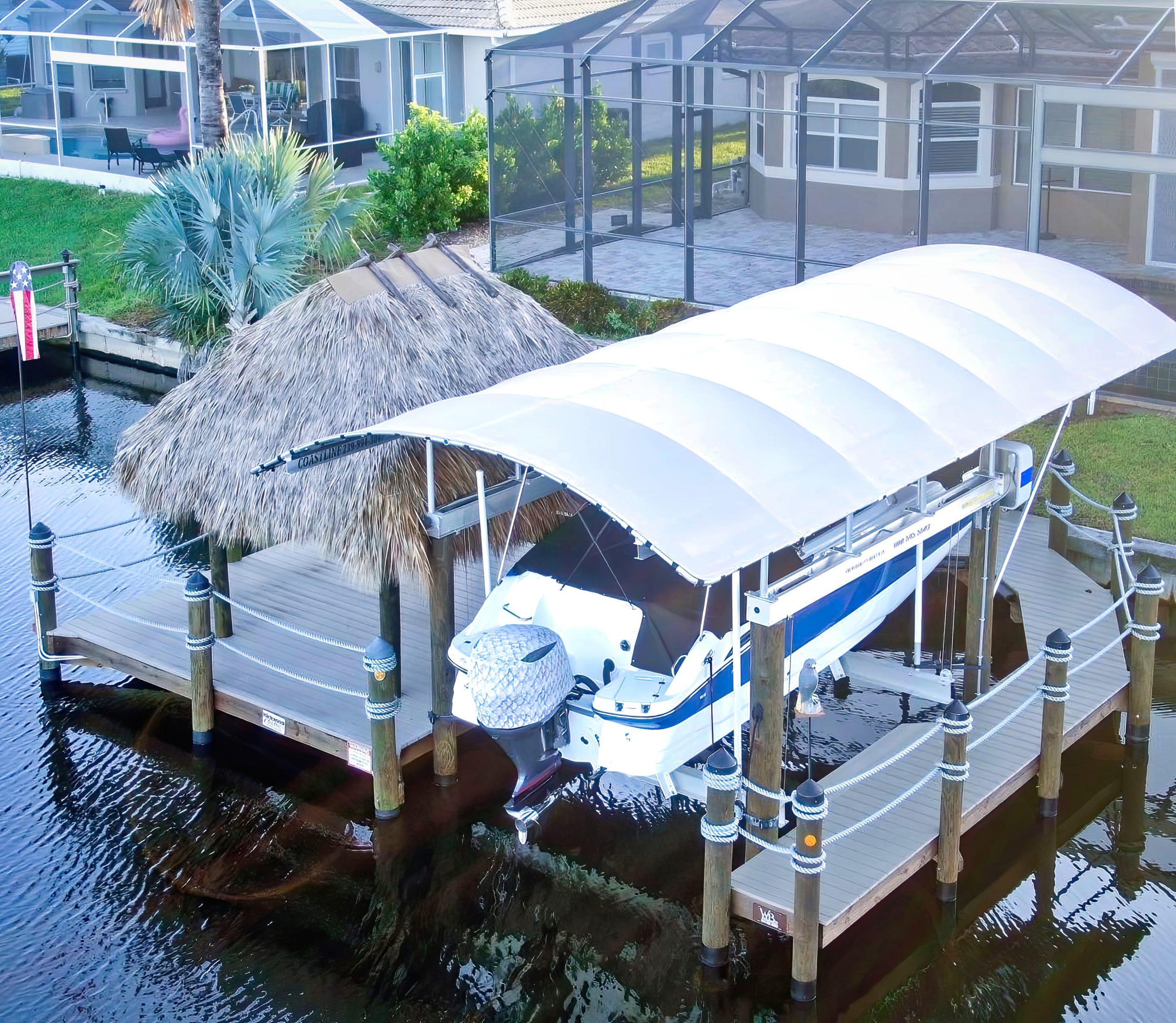
If you prefer to bypass the canopy and take it to the next level, you can construct a full-fledged boathouse for the ultimate upgrade. Check out this two boat garage which has two Superlifts that have had their cradles decked over.
Building a Boathouse

Time to Get Tiki With It

If entertaining is your thing, then why not go all out and add a nice Tiki Hut. Adding a Tiki Hut can expand your seating, and kick off happy hour dockside with the convenience of a bar.
Adding a Tiki Hut can expand your seating, and kick off happy hour dockside with the convenience of a bar.

Conclusion

In conclusion, IMM Quality Boat Lifts offer much more than just functionality; they are a key element in creating an elegant and stylish waterfront living experience. With their customizable design, quality construction, and ability to integrate seamlessly with your property’s aesthetics, these lifts are an essential addition for anyone looking to enhance the beauty and value of their waterfront home. Embrace the elegance and enjoy the practical benefits that come with choosing IMM Quality Boat Lifts for your dockside living.  If you still have questions about all the customization you can contact us here.

Elevate Your Water Adventures: Exploring Boat Lifts for Small Boats, Kayaks, and Personal Watercraft

elevate your water adventures cover image

When it comes to watercraft ownership, boat lifts are an essential investment for individuals who own small boats, kayaks, or personal watercrafts. These ingenious systems not only provide convenience but also offer numerous benefits such as protection against water damage, increased longevity of vessels, and hassle-free maintenance. In this article, we will explore the world of boat lifts, their types, advantages, and considerations for choosing the right one for your small watercraft.

1. The Importance of Boat Lifts

Owning a small boat, kayak, or personal watercraft often means dealing with the challenges of storage and maintenance. Boat lifts offer an effective solution by raising your watercraft out of the water when not in use. This elevation eliminates concerns related to exposure to marine growth, hull damage caused by floating debris, and the corrosive effects of saltwater. By keeping your vessel out of the water, you can significantly extend its lifespan and reduce maintenance costs.

2. Types of Boat Lifts

Boat lifts come in various types, each designed to cater to specific watercraft and docking situations. The most common types for small boats, kayaks, and personal watercraft include:

a) Vertical Boat Lifts: Ideal for small boats and watercraft, these lifts elevate the vessel straight up out of the water, saving space and allowing easy access for boarding.

boat on lift during hurricane,boat on lift during hurricane season,what to do with boat during hurricane

b) Floating Dock Lifts: Designed for kayaks and personal watercraft, these lifts feature a floating platform that supports and raises the watercraft out of the water. They are versatile and can adapt to changing water levels.

boat on lift during hurricane,boat on lift during hurricane season,what to do with boat during hurricane

c) PWC Lifts: Specifically designed for personal watercraft, these lifts often come with adjustable bunks or cradles to secure the watercraft. They are compact, easy to use, and protect your valuable personal watercraft from the elements.

boat on lift during hurricane,boat on lift during hurricane season,what to do with boat during hurricane

d) Dual PWC Jet Ski Lifts: For those who own multiple personal watercraft, a dual PWC jet ski lift is an excellent solution. These lifts are specifically designed to accommodate two jet skis simultaneously, providing efficient storage and easy access to both watercraft. Dual PWC lifts come in various configurations, including side-by-side lifts or lifts with a shared platform.

boat on lift during hurricane,boat on lift during hurricane season,what to do with boat during hurricane

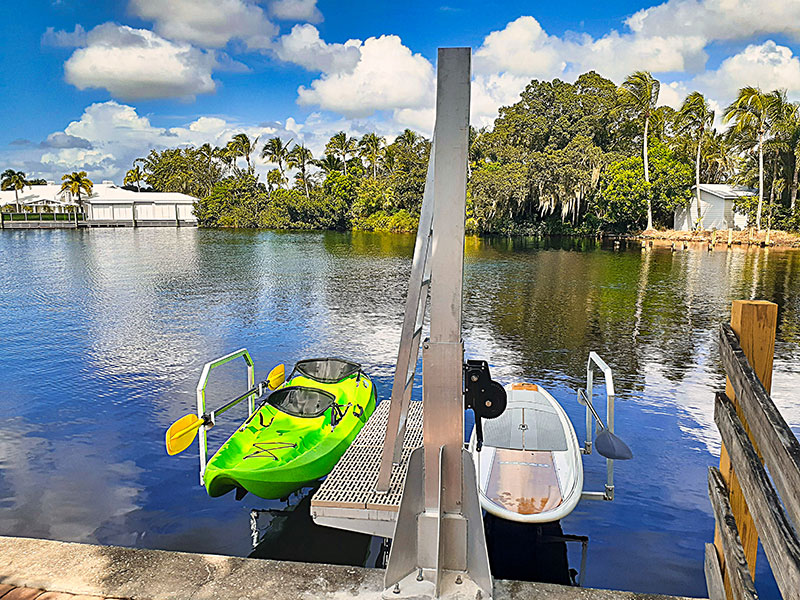
e) Kayak Lifts: These lifts are designed to provide a simple solution for getting kayaks in and out of the water quickly. We have three generations of engineering experience, which has been utilized to create kayak dock lifts that are user-friendly, space-efficient, and durable enough to last a lifetime.

boat on lift during hurricane,boat on lift during hurricane season,what to do with boat during hurricane

f) Ascension Stair Lift: This revolutionary lift offers convenient water access with an adjustable height boarding platform attached to a set of stairs with self-leveling steps. The boarding platform is capable of going both above and below your deck height.

boat on lift during hurricane,boat on lift during hurricane season,what to do with boat during hurricane boat on lift during hurricane,boat on lift during hurricane season,what to do with boat during hurricane

3. Advantages of Boat Lifts for Smaller Watercrafts

Investing in a boat lift offers a multitude of advantages for small boat, kayak, and personal watercraft owners:

  1. Protection from the Elements: Boat lifts keep your watercraft safely elevated, protecting them from damage caused by wind, waves, and harsh weather conditions.
  2. Easy Access and Docking: With a boat lift, launching and docking your watercraft becomes a breeze. You can quickly and conveniently access your vessel without the need for ramps or trailers.
  3. Reduced Maintenance: By keeping your boat or watercraft out of the water, you can minimize maintenance requirements such as cleaning, painting, and bottom maintenance, saving both time and money.
  4. Increased Security: Boat lifts deter theft and unauthorized use, as your watercraft is securely elevated out of reach when not in use.

4. Choosing the Right Boat Lift

Selecting the appropriate boat lift for your small boat, kayak, or personal watercraft is crucial. Consider the following factors before making a purchase:

  1. Weight Capacity: Ensure the lift can safely support the weight of your watercraft. You can use our handy Boat Lift Capacity Calculator to help determine the best boat lift for your watercraft.
  2. Size and Dimensions: Choose a lift that accommodates the length, width, and height of your vessel.
  3. Water Conditions: Take into account the water depth, current, and fluctuation when selecting a boat lift to ensure stability and functionality.
  4. Ease of Use: Look for lifts with user-friendly features such as remote controls, automatic leveling, and adjustable settings for convenience.

Conclusion

Investing in a boat lift is a wise decision for small boats, kayaks, and personal watercraft owners. These lifts provide numerous benefits, including protection against damage, reduced wear and tear, along with just making it more enjoyable to use your watercraft. If you need help choosing the best boat lift for your requirements, don’t hesitate to contact us.

How to Prepare your Boat and Dock for Hurricane Season

how to prepare your boat and dock for hurricane season

The key to protecting your boat and home from hurricanes is to get prepared well in advance of any threatening weather.

Hurricane season should be taken seriously, especially if you live on the Eastern seaboard or the Gulf of Mexico. Hurricane season starts June 1st and lasts until the end of November. While there is nothing you can do to prevent a hurricane from occurring, there are a number of preventative measures you can take to prepare your boat and dock for the conditions they may be exposed to during a tropical storm or hurricane.

Check Your Seawall

boat on lift during hurricane,boat on lift during hurricane season,what to do with boat during hurricane
By Sea Me Dive

Take a look at your seawall during low tide. If you notice any cracking, shifting or leaning of the seawall, bowing, or erosion of the ground around the seawall, it is best to get it inspected by a professional marine contractor. There are certain types of cracks which are just cosmetic. However, it takes a trained eye to know when the structural integrity of the seawall has been compromised.

Have Your Dock Inspected

boat on lift during hurricane,boat on lift during hurricane season,what to do with boat during hurricane
By Ray Ewing

If your dock is old or in bad condition, it may not be able to withstand the high winds and rough waters during severe weather. The integrity of your boat lift is only as good as the underlying structure. It is a good idea to have your dock and pilings inspected by a professional to make sure they are in good condition and will not break apart and damage your boat, house, or surrounding structures.

Make sure your home is prepared

boat on lift during hurricane,boat on lift during hurricane season,what to do with boat during hurricane

The most important thing is to have an emergency preparedness plan for your family. For help creating an emergency preparedness plan, you can consult this really good guide. Next, you will want to secure your home before an impending storm hits. It goes without saying that you should install your hurricane shutters (or board up windows), sandbags and other safety devices. There are many obvious precautions to take when it comes to things outside your home. For instance, you’ll want to bring in outdoor furniture, potted plants, and anything else that may blow away in the wind or potentially harm your home or neighbors’ homes. You should think about the specific needs of your family and then assemble a disaster supplies kit.

Make Sure Your Boat is Prepared

Make Sure Your Boat is Stored Properly
By BoatU.S.

The first thing to do is to secure your essential documents in a safe location on dry land. You will want to have photos of your vessel and home, an inventory of items in your home, an inventory of equipment on your vessel, contact phone numbers including your insurance company, copies of your insurance policies, a copy of your vehicle registrations and any other documents you deem essential. Next, you should turn off the boat’s electrical system and remove the battery. Remove any detachable equipment from the vessel to prevent breakage (such as radios, sails, canvas, cushions, dinghies, and other equipment). Lash down anything that can’t be removed, such as wheels, tillers, and booms. To prevent chafing, wrap protective covering around your lines wherever the ropes touch the boat. Seal off all windows, doors, and hatches. Finally, make sure to shut off your boat’s fuel lines.

Make Sure Your Boat is Stored Properly

To prevent or minimize damage to your boat, you must make sure it is stored properly. While the best solution is to relocate the vessel out of the storm area, this may not be practical based on personal safety factors and limited availability of time and resources. Taking it to storage on dry land, if you have that option available, will be the next safest option as the vessel will be protected from rough water and storm surge. As a rule, boats tied to docks are at higher risk than boats kept at moorings or on anchors. Floating docks are rarely strong enough to take the loads exerted on them by boats in storm conditions. In addition, if the storm surge or tides are extremely high, floating docks may simply float off the pilings which hold them in place. A boat kept at a dock can’t weathercock (face into the wind) as storm winds change direction. Therefore, the boat at a dock almost always presents more windage than a boat secured to moorings or anchors that is free to swing head to wind.

The BoatUS Marine Insurance company wrote an excellent article on preparing boats for hurricanes. It discusses the various forces that can damage your boat during a hurricane. It then discusses the pros and cons of securing your boat ashore, at dock, in hurricane holes, on high-rise storage racks, on davits, on boat lifts, on trailers, at a mooring, at anchor or both. It provides step-by-step instruction on how to position your boat and arrange the lines for each of the possibilities. It also discusses other critical points that will help minimize the potential for damage during severe weather.

How to Prepare Your Boat Lift

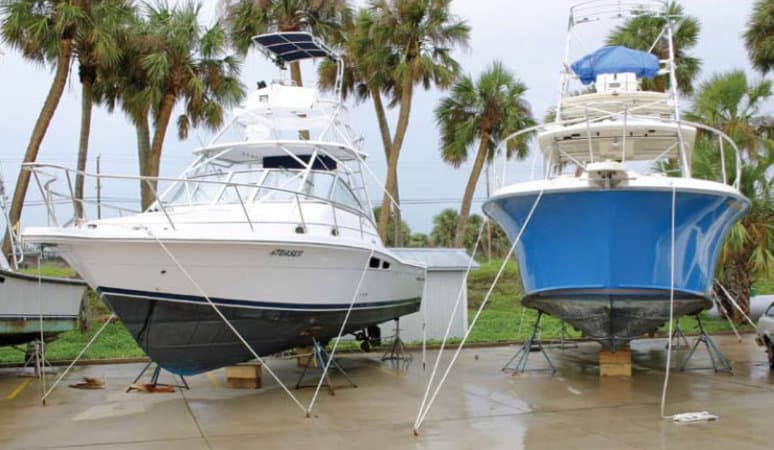
We do not recommend securing your boat to the boat lift during a hurricane. A boat lift is not the ideal place to store your vessel during a hurricane, as the storm surge can rise higher than your lift. Furthermore, your boat has a lot of surface area relative to the piles and will greatly increase the wind force on the piles. Leaving the boat on the lift will increase the likelihood that hurricane-force winds will break the piles (or lift them out of the seabed) and cause your lift to collapse.

Therefore, the first step of preparing your boat lift for a hurricane is to remove the boat and store it someplace safe. Once the boat is removed, raise the cradle beams as high as you can and tie off the cradles to the piles. If you have an elevator-style lift, use extra lines to secure the cradle arms to help minimize the potential for them to sway in the wind. If you think the storm surge will swamp the lift, remove the boat lift motors, gearboxes, switches, covers & store in a dry safe place. Make sure you secure the cradles to structure BEFORE removing the gearbox as the cradles will fall without the gearbox holding the cables in place.

If you want to go the extra mile, you can reinforce your lift and piles using aluminum I-beams. Bracing your lift enables you to securely lock each corner of your lift’s cradle to its piling and creates one solid structure between the four pilings and the four corners of your lift. Your cables are one of the weak points of the lift, and the bracing will also support your cradles if the cables break. To accomplish this, you run an I-beam under each lift top beam and secure them to the slip side of the piles with U-bolts, aluminum backing plates, and locknuts. Then, the cradle beams will rest on and be secured to the I-beams. Our engineers can help you size the appropriate components and provide instructions for their installation. Or if you prefer an all in one kit, they are available from companies like Swing Stoppers.

What if you have no choice but to leave the boat on the lift?

If storing your boat somewhere else is not an option, knowing the amount of storm surge (the expected height of water above normal predicted tide) is the determining factor in how to best secure your boat to the lift during a hurricane.

If you are 100% confident that the storm surge will be below the raised height of the boat, you can take the following steps. Prepare the boat and lift as described above, leaving all lift equipment installed. The most crucial factor is to create a drainage system to prevent water from collecting in the hull and overloading the lift. It is not a good idea to rely on bilge pumps and batteries for draining the water since they can become overloaded (or fail) in a storm. Remove the boat drainage plug(s), so the water can drain out by gravity, lessen the strain on the bilge pumps and prevent the lift structure from overloading. If possible, slightly tilt (1-2 inches) the boat on the lift so that the rainwater will run out of the scuppers. This is easily accomplished on IMM Quality lifts using our wedge locks or adjustable height bunk brackets. Raise the boat as high as your lift allows and tie it as tightly as you can to the lift.

If the boat lift does not go high enough to be above storm surge levels or if you are not sure, you can try the following things. Prepare the boat and lift as described above, leaving all lift equipment installed. Slightly tilt (1-2 inches) the boat on the lift so that the rainwater will run out of the scuppers. Leave the boat drainage plug(s) in place. Pray that your bilge pumps don’t fail or become overloaded by the storm. Raise your boat as high as the lift allows but do not secure the boat to the lift. Secure long ropes to anchor points (do not secure to floating docks, use pilings) in case the surge lifts the boat off the lift. It is best to tie the lines high on the pilings, so they will not be chafed if a floating dock rides up on the pilings. Instead of using loose bowlines around the pilings, use multiple clove hitches, or a clove hitch finished with two half hitches. That way, the lines will tighten on the pilings, and are unlikely to pull off even if the pilings go under. If all goes well, these steps may help keep your boat somewhat close to your boat lift.

After the Storm

There is no way any one blog post can cover all of the contingencies (for example, we have completely ignored insurance concerns), but we hope this article puts you on the right path. If you follow these tips and think about how they apply to your situation, you will be well prepared for hurricane season and can rest easier knowing your home and boat are as safe as possible. For more information on what to do once the weather clears up, please read our post “After a Storm: Inspecting Your Boat Lift and Dock”.

Get High Quality Boat Lifts Today!

At IMM Quality Boat Lifts, we are committed to building the best quality boat lifts on the market today. Our lifts are built to last a lifetime.

But more than that, we want you to enjoy being out on the water in your boat. We don’t want you wasting your time on maintenance, repairs, or even where to find the best boat shoes. Keep visiting our blog to learn all about the boating lifestyle and Boat Lifts.

Frequently Asked Questions (FAQs) for Preparing your Boat and Dock for Hurricane Season

Hurricane season spans from June 1st to November 30th, critically affecting those on the Eastern seaboard and Gulf of Mexico. Preparation is key to protecting boats and docks.

Inspect your seawall at low tide for signs of cracking, shifting, or erosion, and consult a professional if you notice these indicators.

Beyond securing your property, assembling a disaster supplies kit and having a plan tailored to your family's specific needs are vital steps.

Secure essential documents, turn off the electrical system, remove detachable items, and lash down immovable parts. Consider storage options based on storm surge expectations.

Remove the boat from the lift, secure cradle beams, consider removing lift motors if a surge is expected, and brace the lift if possible.

Installing a Boat Lift Cable

blog install boat lift
Boat lift cables are important components in a boat lift. They can encounter catastrophic failure when you do not install them correctly or when you do not maintain them well. With the different sizes, models, and brands of boat lifts on the market, it is appropriate to consult a professional and licensed boat lift technician before you buy or install a new boat lift cable.
If your boat lift needs new cables, you might be curious about how to properly install them or how the boatlift technicians will do it for you.
This article defines a boat lift cable, introduces the types of boat lift cables, guides you on the right installation procedure, and lists important tips for maintenance.
blog install boat lift1

What is a Boat Lift Cable?

Boat lift cables, also called hoist wires or cables, connect the lifting mechanism to the cradles that pick up the boat. They allow the boat or watercraft to be lowered and raised whenever you need them.
The lift cables will always wear down with time and will need to be replaced.  It does not matter what type of lift cable you choose as they will wear out with time. The duration before you replace the cables will depend on the type of cable, the type of lift, performance of proper maintenance and how often you use the lift. Replacing worn lift cables is a necessary part of owning a boat lift, like changing the tires on your car.

Types of Boat Lift Cables

There are many types of boat lift cables. Some are made from galvanized steel cable while most boat lifts use 300 series stainless steel cable. Lift cables also differ in their construction and can vary in diameter as well as the number and orientation of strands used in their construction.

Galvanized Cable

Galvanized cable is more flexible and softer when compared to stainless steel cable. This makes galvanized cable more resilient to work hardening (the process where metal will break after it is repeatedly bent) and to abrasion damage. The major problem with galvanized cable is that the galvanized coating does not provide adequate protection against cable corrosion. This means you should not use the galvanized cable in salt water or submerge it for long periods in freshwater.
Although the galvanized cable has problems with rust, it is more affordable than stainless steel cable. This makes it an excellent option for freshwater boat lifts.

Stainless Steel Cable

When compared to galvanized cables of similar size, stainless steel cables can not lift as much weight. This results in stainless steel cables costing more than galvanized cables with the same weight rating. A stainless steel cable is an excellent option for saltwater boat lifts since it has better corrosion resistance than galvanized steel. The problem with stainless steel is that it is more prone to work hardening and abrasion damage. There are different grades of stainless steel cable. 304 stainless is more flexible and wear resistant than 316 stainless which has the highest corrosion resistance. It is a good idea to regularly check stainless steel cables for broken strands by gently feeling along the length of the cable while exercising lots of care to avoid cutting yourself.

Cable Construction

Boat lift cables also differ in their construction. Cables with larger diameters will be able to carry more weight. Typical boat lift cables come in 5/16″ and ⅜” diameters. Cables can be made with different strand configurations. Two common configurations used with boat lift cables are 7 x 19 and 6 x 36 construction. For a given diameter, the 6 x 36 construction will have thinner strands which will result in a more flexible cable.
blog install boat lift2

How to Install Boat Lift Cables

The boat lift cable installation process relies heavily on the type of boat lift you own. We highly recommend having a professional marine contractor install the replacement cables. They have the experience and access to specialized equipment that make the job safer and easier. For your knowledge and to assist the marine contractor please
  • Identify the type of boat lift at your home, then obtain the owner’s manual, installation manual and product specification sheet from the manufacturer. If you own an IMM Quality Boat Lift, please call (800) 545-5603 and ask to speak with technical support if you have any questions.
  • Please read the pertinent information from these documents and make sure that you fully understand the steps.
If you choose to perform the work yourself, here is a step-by-step guide on how to install a replacement boat lift cable.
    1. Obtain the correct size and length of replacement cables for your specific boat lift from the manufacturer.
When washing down your boat after a day on the water, don't forget to also wash the salt and sea spray from your boat lift top beams and cradles.
Image A. The IMM Quality Boat Lift’s replacement cable comes with a fused end and a copper stop on the other end.
    1. Remove the boat / watercraft from the boat lift.
    2. Secure the cradle beams. We recommend using nylon strapping to tie the cradle beams to the top beam channel. Some marine contractors will use chain or other strapping, while others will use their barge to support the cradle beams and bunks.
When washing down your boat after a day on the water, don't forget to also wash the salt and sea spray from your boat lift top beams and cradles.
Image B. During a cable replacement, the cradle beams were held above the water using chains.
    1. With the cradle beams secure, cut and remove the worn lift cables.
    2. When installing the new cable, it is easiest to start at the cable winder. The IMM Quality Boat Lift cable winder is drilled with two holes, one larger and one smaller, in line with each other. Insert the fused end of the cable into the larger hole and then through the smaller hole. Continue to pull the fused end of the cable through the winder until the copper stop bottoms out on the smaller hole.
When washing down your boat after a day on the water, don't forget to also wash the salt and sea spray from your boat lift top beams and cradles.
Image C. Looking down at the IMM Quality Boat Lifts cable winder to show the two in-line holes with the larger hole towards the top (closest to viewer) of the winder.
    1. Route the cable according to the cable routing diagram provided by your manufacturer.
When washing down your boat after a day on the water, don't forget to also wash the salt and sea spray from your boat lift top beams and cradles.
Image D. The cable routing diagram for an IMM Quality 10,000 pound beamless boat lift.
    1. Repeat steps 4-6 for the remaining cables. On a typical 4 post lift, each lift will have four sets of cable, two for each top beam, one for each winder. Elevator lifts only have two sets of cables, one for each powerhead.
    2. When all of the new cable has been installed, you may remove the support strapping. Allow the cradles to drop gently into the water and come to a rest on the sea bed.
    3. Raise the lift, watching to make sure that the new cable is winding properly on all of the winders. Continue to raise the lift until the cradles are out of the water.
    4. IMM Quality Boat Lifts use the patented wedge lock. The wedge lock allows you to easily adjust the cable length. Our competitors’ cables terminate with copper stops or loops attached to shackles which do not allow adjustment.
When washing down your boat after a day on the water, don't forget to also wash the salt and sea spray from your boat lift top beams and cradles.
Image E. Adjusting cable length is easy with the wedge lock, whereas our competitors use non-adjustable cable terminations
  1. Use the wedge lock to adjust the cable length so that the cradle beams and bunks are level. Simply loosen the internal wedge to feed cable through in either direction. When the cradles are level, pull down on the cables to lock the wedge, securing the cable.
  2. Run the lift up and down a few times. Watch and listen carefully. You want to make sure that everything is working properly with the boat lift. Do not load a boat onto the lift until you are satisfied that everything is working properly.
Congratulations! You are all finished. You may lower the lift and put the boat back on.

Necessary Precautions to Take When Installing New Boat Lift Cable

  • Ensure you work in a safe manner at all times
  • Ensure you only use the right equipment and tools
  • Follow only the relevant instructions and drawings
  • Please review the installation to ensure it is complete and well done

Common Problems During the Installation of a Boat Lift Cable

If you install the lift cables improperly or hastily, you will likely encounter many problems with the boat lift. Make it a habit of inspecting everything when you are done with the installation. In most cases, un-smooth movements or unusual sounds will be a red flag that will enable you to detect a problem that needs to be corrected. The most common problem experienced during installation is that the cables are not wrapping properly on the winder. The cables should wind neatly and tightly within the grooves of the winder. If you notice any backlash (tangle) with the cable, do not try to remove it with your hands. Trying to fix backlash with your hands puts you at serious risk for injury. Simply lower the cradles, until the backlashed cable is off the winder, then slowly raise the cradles making sure the cable is winding properly.
When washing down your boat after a day on the water, don't forget to also wash the salt and sea spray from your boat lift top beams and cradles.
Image F. Save your fingers! Do not try to fix backlash by pulling on the cable with your hands.
If you don’t have an IMM Quality boat lift, the most difficult part of cable installation is getting the cradles and bunks level. Most boat lift manufacturers use cables that terminate with a loop. This loop connects with a shackle, which does not allow adjustment of the cable length, making leveling your cradles very difficult.
When washing down your boat after a day on the water, don't forget to also wash the salt and sea spray from your boat lift top beams and cradles.
Image G. Replacement cable with loop end. As shown on the right, the loop is attached to a “D” shackle on the boat lift.
To level the cradles on our competitor’s lifts, you need to adjust the cable length at the winder. First, you need to run the lift all the way down, so that all the cable is off the winder. Some lifts use copper stops to secure the cable to the winder and others use wire rope clips. To shorten the cable length you have to: 1. Cut of the copper stop, pull the required length of cable through the hole in the winder, put a new copper stop at the right location and crimp it securely in place, or 2. Loosen the wire rope clip, pull the required length of cable through the hole in the winder, tighten the wire rope clip to hold the cable in the new position. When washing down your boat after a day on the water, don't forget to also wash the salt and sea spray from your boat lift top beams and cradles. As you can clearly see, the patented IMM Quality Boat Lifts wedge lock makes adjusting cable length to level the cradles much easier.

Maintenance Practices after Installation of New Boat Lift Cable

After you are finished with the new cable installation, you need to make sure that you maintain them. Proper maintenance of the new boat lift cable will ensure it functions well and will prolong its lifespan.
The most important thing to do is to routinely inspect the cables for signs of damage or wear. You do not want to see any signs of rust, kinks, broken strands or any other irregularities. To help protect the strands of the cable, you can use a penetrating chain and cable spray lubricant. This will protect the internal strands from abrasion wear as well as the outer strands from corrosion.
You should also make sure that any pulleys are turning freely. Cables sawing against seized pulleys will cause great damage that may result in a catastrophic break. Frequently rinsing your lifts moving parts with fresh water to remove salt deposits will help prevent the pulleys from seizing. IMM Quality Boat Lifts uses self-lubricating bushings so no maintenance lubrication is needed with our pulleys. However, most manufacturers use pulleys that require lubrication with grease.
Even if there are no signs of wear and tear, we recommend replacing the lift cables every two years or after 200 up and down cycles, whichever comes first.

Conclusion

We hope you found this guide helpful and informative. By showing you the steps needed to install new lift cables, we hope that you will make your boat lift’s maintenance a priority.

We also hope that we have convinced you that maintaining an IMM Quality boat lift is much easier than with the competition. Our lifts were engineered to make the user experience as easy and enjoyable as possible. By only using the best possible materials, we will save you time and money by reducing the amount of maintenance you need to perform on your lift. That way you will be able to get back out on the water and enjoy yourself.

If you have any questions or need any advice about your boat lift maintenance, please don’t hesitate to call us at (800) 545-5603. Also, if you need any parts for your maintenance, our sales team will make sure that you get what you need. IMM Quality Boat Lifts. Built for a Lifetime!

Happy Boating!

Frequently Asked Questions (FAQs) about Installing a Boat Lift Cable:

A boat lift cable is a wire or cable that connects the lifting mechanism to the cradles, allowing the boat to be raised or lowered as needed.

Boat lift cables can be made from galvanized steel or stainless steel, with different constructions like 7x19 or 6x36, affecting their flexibility and strength.

The installation process varies depending on the type of boat lift, but it generally involves securing the cradle beams, removing old cables, and routing new cables according to the manufacturer's diagram.

Safety is paramount, so use the right equipment, follow instructions carefully, and ensure the installation is complete and secure.

Regularly inspect the cables for damage or wear, lubricate them to protect against corrosion and abrasion, and replace them every two years or after 200 cycles.

The Ultimate Guide: How to Shop for a Boat Lift

pontoon vs triple pontoon boats image

Owning a boat is a dream come true for many water enthusiasts. To protect your investment and make your boating experience more convenient, a boat lift is an essential accessory. A boat lift provides safe storage, easy access, and protects your boat from water damage and corrosion. However, with a wide variety of boat lifts available in the market, choosing the right one can be overwhelming. In this article, we will guide you through the process of shopping for a boat lift, ensuring that you make an informed decision.

Determine Your Needs:

  • Before diving into the boat lift shopping process, it’s crucial to assess your requirements. Consider factors such as the size and weight of your boat, the water conditions, and any specific features you desire in a boat lift. Determine if you need a lift for fresh or saltwater, as the requirements may vary.

Understand Different Types of Boat Lifts:

superlift 44 freemen 2 edit
superlift 44 freemen 2
  • Boat lifts come in various types, each designed to cater to specific needs. The most common types include:
    • Vertical Boat Lifts: The industry standard is ideal for most water conditions and dock configurations. These lifts hoist the boat vertically. At IMM Quality our vertical boat lift can be easily identified by its parallel upper beams with a covered powerhead. Each beam contains a motor-driven shaft through their length. These are what controls the winding of the four cables. The other end of the cables connect to the four corners of the boat cradle, which can then be used to raise or lower the boat by rotating the shaft.
    • Elevator Boat Lifts: These are typically the solution if you have restricted access to waterfronts. For example, these are common on narrow canals, where outboard pilings are not an option, or where the bottom surface is too hard to drive pilings into it.
    • Specialty Boat Lifts: At IMM Quality we have seen it all, which is why we can provide custom boat lift solutions for instances where Vertical Lifts or Elevator Lifts are not an option. Three of our popular specialty lifts are Beamless Lifts, for those that do not want top beams, Trident Lifts, our 3-Pole design suited for corner canal lots, and Marine Railway Lifts which are ideal for beach access.
    • PWC Lifts: If you own a personal watercraft or jet ski, a PWC lift is specifically designed for you. They provide easy access to your watercraft and protect it from the elements.

Consider Weight Capacity and Size:

  • Ensure that the boat lift you choose can handle the weight and size of your boat. Exceeding the lift’s capacity can lead to accidents and potential damage to your boat. Take accurate measurements of your boat’s length, width, and weight to find a lift that matches these specifications. You can use our Boat Lift Capacity Calculator to help determine what you will need.

Evaluate Construction and Material Quality:

  • Look for boat lifts made of durable, corrosion-resistant materials such as aluminum or stainless steel. These materials ensure longevity and require minimal maintenance. Pay attention to the design and engineering of the lift. Does the lift have stepped channel, grooved winders, wedge-locks and other machined parts that enhance the lift’s durability and ease of use?

Safety Features:

  • Safety should be a top priority when shopping for a boat lift. Look for features such as a secure and stable cradle system, reliable pulleys, adjustable bunk brackets, and reliable drive systems. Additional safety options like remote controls and automatic stop mechanisms add convenience and peace of mind.

Consider the Installation Process:

  • Evaluate the installation requirements of the boatlift you are considering. Some lifts may require professional installation, while others offer DIY options. Consider the ease of installation, any additional costs involved, and if the manufacturer provides clear instructions or support.

Research Manufacturers and Reviews:

  • Before making a final decision, research reputable boat lift manufacturers and read customer reviews. Look for manufacturers with a proven track record of producing high-quality boat lifts and excellent customer service. Real-life experiences shared by boat owners can provide valuable insights into the performance and reliability of different boat lift models.

Conclusion:

Investing in a boat lift is an important decision to protect your beloved watercraft and enhance your boating experience. By understanding your needs, exploring different types of boat lifts, considering weight capacity, evaluating construction quality, prioritizing safety features, and researching manufacturers, you can confidently choose the boat lift that best suits your requirements. Remember, a well-chosen boat lift will not only safeguard your boat but also save you money and provide a more enjoyable boating experience.

Comparing Tritoon vs Pontoon Boats: Which is Best For You?

tritoon vs pontoon featured

Tritoon Boats vs Pontoon Boats

As you might already know or expect, pontoon and tritoon boats are very similar flat-bottomed boats with the tritoon having one extra hull in the middle. This extra hull in the middle allows for bigger and heavier boats with more stability and speed potential, but also at a higher cost. We’ll review the pros and cons of each along with potential use cases so you can make the best decision on which boat is best for your needs. Tritoon Boats

Differences in Structure, Design, and Use: Pontoon vs Triple Pontoon Boats

First, let’s review why you might want a pontoon boat over other more traditional fiberglass hull boats: Pontoon boats offer great stability, plenty of seating, and a smooth ride, making them ideal for recreational use. For fishing, they provide an open floor plan. For cruising, they are spacious and can allow for more people. Pontoon tubes are generally round and smooth which fits with their slower pace and preferred activities. When fishing or swimming, the soft and round tubes of a pontoon are less obtrusive. Tritoon boats are an extra option for pontoon lovers who want more power and performance. The three pontoon tubes offer extra stability in choppy waters, which makes them better for wakeboarding, skiing, and other water sports. They also track better than pontoon boats and offer higher top speeds. They are usually shaped like an upside-down V, which helps them knife through the water and be more aerodynamic. While this may seem like a small difference, it does lend itself to faster boating activities like wakeboarding.

Materials of Pontoon Construction

One consideration may be the materials that the pontoon itself is made of. Some pontoons use a more flexible material such as polyethylene or kevlar that is softer and allows for a smoother ride. It also makes transportation potentially easier. The downside to these flexible materials is that they may require more maintenance and there is a slightly higher risk of puncture over time. Alternatively, you can consider a rigid steel or aluminum hull pontoon. Aluminum is very lightweight and will never rust, but it’s generally softer than steel and can be more easily dented or compromised. Aluminum also can’t be easily undented should it hit a rocky bottom. Steel is the strongest material. It’s also the heaviest. Even the best steel can eventually rust, so keeping up to date on paint and sealers becomes important to longevity. Ultimately, there are many materials that pontoons can be made of. Knowing your use frequency and expectations of how long you keep the boat will be important factors in deciding which is best for you.

Traditional Pontoon Boat

When comparing pontoon vs tritoon boats, it’s important to keep in mind your budget and the type of water activities you plan to do. If you’re looking for a recreational boat, a double pontoon is likely the best choice as it is more affordable and offers plenty of seating and stability. However, if you want a high-performance boat that can handle wakeboarding or skiing, tritoon may be the better option for you. If you’re unsure which pontoon type is right for you, talking to an experienced dealer can help make sure you get just what you need. No matter which pontoon type you choose, they are all great options and offer opportunities for fun and relaxation on the water. Custom sailboat cradle beam works better than sling lift

Cruising in Comfort: Benefits of Owning a Pontoon vs Tritoon Boat

Pontoon boats with only two tubes are perfect for those who enjoy leisurely activities like fishing, swimming, and cruising on a calm lake. They offer great stability and plenty of seating space, so you can bring your family or friends along for a relaxing ride on the lake. Plus, pontoon boats require less horsepower than tritoon boats, making them an economical choice. Tritoon boats, on the other hand, are designed for more powerful activities such as wakeboarding, tubing, and skiing. The third tube offers extra stability in rough water, so you can perform these activities with confidence. A triple-tube pontoon boat also tracks better than a boat with just two tubes and offers higher top speeds.

Tritoon vs Pontoon – Main Differences between the Two Boats: A Side-by-Side Comparison

Pontoon Boats

  • Lower Cost
  • Plenty of seating
  • Smooth ride
  • Easier Transport
  • Less horsepower required
  • Not suitable for choppy water or high-performance activities

Tritoon Boats

  • Three tubes offer extra stability in rough water
  • Tracks better than pontoon boats and offers higher top speeds
  • Larger Cargo and People Capacities
  • Suitable for wakeboarding, tubing, and skiing
  • More expensive and requires more horsepower

Cost Differences of a Pontoon vs. Tritoon Boat

The average pontoon boat starts at around $20,000 and can reach as high as $60,000 or more depending on features. Compare that to the starting cost of a Tritoon boat which starts at around $35,000 and can easily top $85,000 depending on the build sheet. As Tritoon boats can carry more, there are generally more accessories and larger engine options available that will contribute to the costs.

Pontoon vs Tritoon Motor Options & Power Requirements

Pontoon boats usually require less horsepower than tritoon boats. This is because pontoon tubes are typically narrower and the pontoon boat is designed for more leisurely activities. Pontoon boats with two tubes often come equipped with outboard motors ranging from 25-50 HP, while tritoon boats generally require at least 50 HP and can accommodate engines up to 300 HP. Whether you opt for a pontoon or tritoon, make sure the motor size is suitable for your needs. Consider factors like boat weight, type of activities, and water conditions before making a decision. Both boats come with many different motor options, so there’s bound to be one that fits your specific requirements.

Tritoon vs Pontoon Storage Space & Amenities

Pontoon boats and tritoon boats come with different amenities and storage options. Pontoon boats are usually larger than tritoon boats, so they offer more seating capacity as well as additional features like dockside bars and built-in grills. Tritoon boats are generally smaller in size, but they make up for it with powerful motors that allow you to perform high-performance activities with ease. When it comes to storage space, pontoon boats tend to have more room due to their larger size. They typically include plenty of cubbies and compartments for storing your gear, drinks, and other items. A pontoon with three tubes will also provide adequate storage space, but you may need to get creative if you plan on bringing a lot of items with you. Tritoon vs Pontoon Storage Space & Amenities

Maximize Your Boating Experience with a Boat Lift

Regardless of whether you choose a Tritoon or Pontoon boat, a boat lift can greatly enhance your boating experience. While these two types of boats may have different features, designs, and benefits, they both can benefit from the added convenience and protection offered by an elevator lift. A boat lift is a smart investment for any boater, as it provides a convenient way to get your boat in and out of the water. A boat lift eliminates the need for manual labor, making it easier to launch and retrieve your boat. Additionally, using an elevator lift helps to protect your boat from damage caused by exposure to the elements, seawater, and marine growth, prolonging the lifespan of your boat and reducing maintenance costs in the long run. Whether you own a Tritoon or Pontoon boat, a boat lift is a great choice for maximizing your time on the water. The added convenience and protection offered by these lifts can make boating more enjoyable and effortless, allowing you to spend less time and energy launching and retrieving your boat, and more time enjoying the water. IMM Quality Boat Lifts has pre-designed solutions to ensure your pontoon or tritoon boat is lifted with precision and care. No matter the material or shape of your boat’s pontoons and hull, we have simple solutions that will suit your needs.

Wrapping Up: Which Pontoon Boat is Best For You?

When deciding between pontoon and tritoon boats, it’s important to consider your budget, needs, and preferences. Pontoon boats offer great stability and plenty of seating for recreational activities, while tritoon boats provide more power and performance for wakeboarding, tubing, and skiing. Ultimately, the best pontoon boat for you is the one that fits your needs, budget, and lifestyle the best. It’s also important to do your research before buying a new pontoon boat or tritoon boat. Read reviews, ask questions, and compare different models to make sure you find the right fit for you. With proper research and planning, you can be sure to get a pontoon or tritoon that will provide years of fun.

Frequently Asked Questions about (FAQs) Comparing Tritoon vs Pontoon Boats

Tritoon boats have an extra hull, offering more stability and speed potential, while pontoon boats are typically more affordable and suited for leisure activities.

The choice between flexible materials like polyethylene or more rigid ones like aluminum or steel impacts the ride smoothness, maintenance needs, and potential for damage.

Tritoon boats are ideal for high-performance activities like wakeboarding and skiing, thanks to their extra stability and speed capabilities.

Yes, tritoon boats generally start at a higher price point due to their enhanced performance and capacity features.

Consider your budget, the types of activities you plan to engage in, and the performance needs, such as stability and speed, to decide which boat is best for you.

The Do’s and Don’t of Floating Boat Lifts

floating boat lifts blog

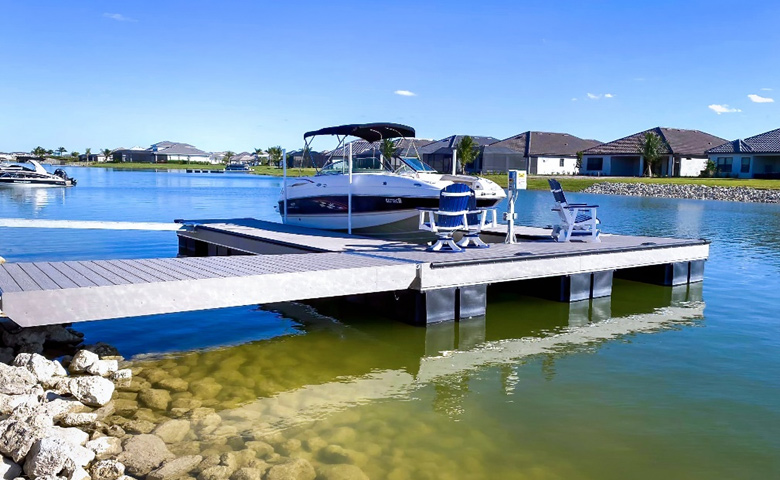
Curious to learn more about the dos and don'ts of floating boat lifts? A Floating Docks and Gangways provides a sleek, low-profile dock and lift combination that is ideal for lakefront communities.

A floating boat lift is buoyant and sits along the surface of the water, as opposed to a fixed dock that is supported by permanent structure (i.e., pilings, seawall, rip rap, etc.). This makes a floating boat lift the perfect solution for conditions where the tide fluctuates significantly or where local regulations restrict the installation of fixed docks.

A valued partner of IMM Quality Boat Lifts, Nelson Marine Construction offers a variety of patented floating boat lifts, including this stable, dependable 7,000-pound capacity NelSun series. The mechanisms are custom-engineered by IMM Quality Boat Lifts and also feature luxurious Azek vinyl decking and fascia.

Located in Bonita Springs, Nelson Marine Construction is owned and operated by lifelong Southwest Florida residents.

This fully licensed and insured company has 40 years of experience and an impeccable reputation for quality workmanship and customer satisfaction. They provide customers with a variety of floating docks and boat lift options. Many feature IMM Quality Boat Lifts engineering and manufacturing for dependability and longevity.

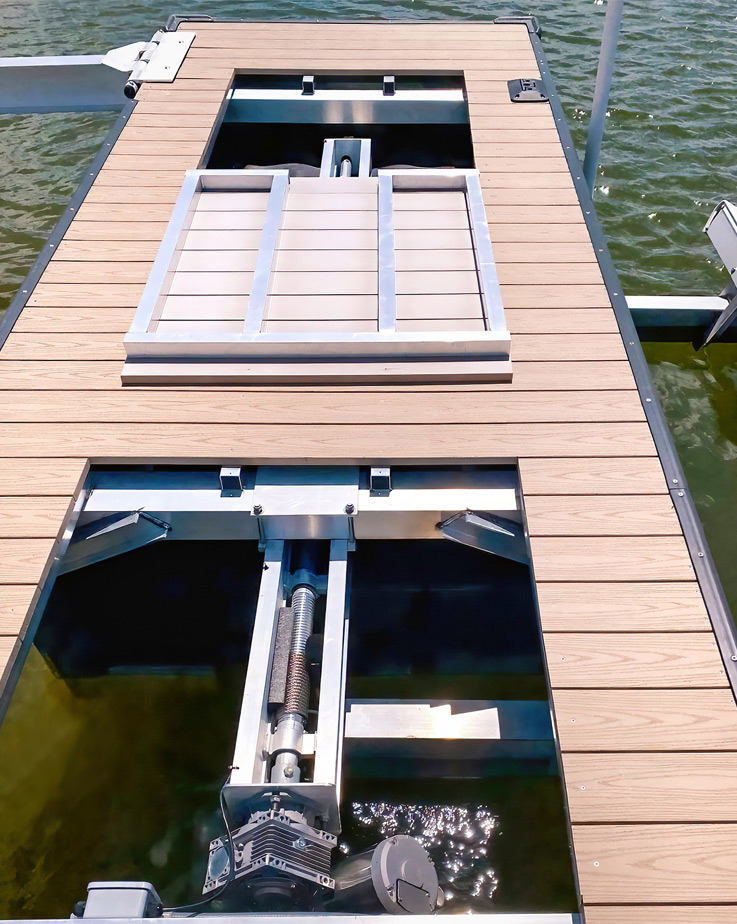
The photo above shows how the boat lift is integrated into the floating dock structure. The lift is supported by cross beams reinforced with sturdy gussets, all hidden under the decking of the floating dock. Removable panels provide access to the lift during installation and for maintenance.

Beyond being stable, floating boat lifts are more affordable than one might expect. Just think about it! You won’t have to pay to have pilings driven, which is a significant savings. However, it is extremely important to use a quality contractor like Nelson Marine Construction, who knows how to properly secure your floating boat lift and dock.

For the professionals, floating boat lifts are fast and easy to install. They also require less labor, hardware and accessories than other boat lift options.

The Dos and Don’ts of Floating Boat Lifts in 8 Easy Steps

According to the experts at IMM Quality Boat Lifts, the dos and don'ts of floating boat lifts are simple. For anyone who has purchased an IMM Quality floating boat lift, here are the steps to ensure you are using your boat lift safely and efficiently.

Step #1: Do make sure the floating lift is properly anchored to the shore. This will ensure that it doesn't move or shift around during use.
Step #2: Do make sure the lift capacity is sufficient for your boat.
Step #3: Do make sure the boat is properly centered on the lift cradles. This will help keep the floating dock level in the water.
Step #4: Do make sure that there is sufficient water depth for your boat at the floating dock location.
Step #5: Do not bottom out the lift cradles when lowering the lift. This accident will unspool the lift cables, potentially snarling them and will prevent the cables from winding properly within the grooves.
Step #6: Do not power your boat onto the lift. Only float the boat on and off the lift cradles.
Step #7: Do raise the boat lift until your watercraft is entirely out of the water. Be sure to keep it stable while doing this.
Step #8: Do secure your boat to the dock while out of the water, using lines and the integrated cleats.
Step #9: Do not forget to perform annual maintenance on the boat lift.
Step #10: Do lower your boat back into the water, and enjoy some much needed rest and relaxation!

Follow these dos and don'ts for floating boat lifts, and you'll be ready to quickly head for open waters with your family!

Feeling intrigued by the idea of a floating boat lift for your waterfront home? There are plenty of options available from which to choose. REQUEST A QUOTE and we'll give you a call!

READ MORE: Building Better Top Beams

Frequently Asked Questions (FAQs) about Do's and Don’t of Floating Boat Lifts

Proper anchoring to the shore is crucial to prevent movement or shifting.

Verify that the lift's capacity is sufficient for your boat.

Centering your boat on the lift cradles is important for balance.

Boats should only be floated on and off the cradles to avoid damage.

Performing annual maintenance on the boat lift is recommended.

Yacht vs Boat: What’s the Difference Between the Two?

Yacht vs Boat
All yachts are boats, but not all boats are yachts. Even so, call a yacht a boat, and the owner might get upset with you. Wait, what? Even though a yacht is technically a boat, it’s not considered to be as classy. So the owner might not be too happy if you call his pride and joy merely a ‘boat’. Okay, so what is the difference between a boat and a yacht? Let’s try to clear this up and settle the yacht vs. boat debate in your mind once and for all. You never know when you might need to use the right terminology.

Yacht vs Boat

A yacht is a type of boat that is larger and more expensive than a regular boat. It is often used for luxury purposes, such as sailing in the sun or cruising around the Mediterranean. A boat, on the other hand, is a more general term that can refer to any type of vessel. It may be smaller and less expensive than a yacht, and can be used for a variety of purposes, such as fishing, sailing, or simply transporting people or cargo. In general, ‘boat’ is a more generic term than ‘yacht’. Most people will often refer to anything from small fishing boats to large cargo ships as a boat. However, there are clearly some differences. While there is no hard and fast rule about what makes a boat a yacht, there are a few differentiating factors. Let’s take a look at them.

Size

A yacht is not usually a very small vessel. The rule isn’t hard and fast, but to qualify as a yacht, the vessel should be about 35 feet or longer. They can get pretty big, reaching up to more than 200 feet long. Though once they start getting big, they can be further qualified as mega yachts and super yachts.

Use

The use of the vessel plays a lot into whether it can be called a yacht or not. The purpose of a yacht is typically recreational. It is a vessel designed with luxury and comfort in mind. In fact, a big part of what makes a boat a yacht is how it is used. That makes sense, right? The word yacht probably conjures up images of a gleaming white boat with polished teak accents in your mind. There’s usually a comfortable interior with bedrooms (suites or cabins), bathrooms, a kitchen (galley), and a seating area (saloon). A boat, on the other hand, has a broader definition of what it can be used for. It can have recreational purposes, like fishing or cruising around a lake. But commercial fishing boats, police boats, and other boats used for work or commercial purposes would be called boats also.

Propulsion

Boats can be either motorized or nonmotorized. A nonmotorized boat might be a little fishing boat that operates under manpower. Larger boats use the wind and sails to power the vessel. There are also plenty of boats with engines. Some can even build up some pretty impressive speed on the water. However, yacht engines tend to be more powerful, and sophisticated and can go longer distances than boat engines.

Now You Know

We hope this has helped clear up some of the yachts vs. boat debate. You can probably understand now why the owner of a yacht would take offense when you call his vessel a mere ‘boat’. At least, the next time you’re wondering which term to use, you’ll have a better idea. Need a boat lift? Get a quote. To learn more interesting tidbits about boats, feel free to check out our blog.

Frequently Asked Questions (FAQs) about a Yacht and a Boat:

A yacht is a larger and more expensive vessel used for luxury purposes, while a boat is a more general term for any type of vessel, often smaller and less expensive.

While there's no strict rule, a vessel is usually considered a yacht if it is about 35 feet or longer.

Yachts are primarily used for recreational purposes and are designed with luxury and comfort in mind, featuring amenities like bedrooms, bathrooms, a kitchen, and a seating area.

Yes, boats can be either motorized or nonmotorized, ranging from small fishing boats operated by manpower to larger boats powered by wind, sails, or engines.

Yacht owners might take offense because yachts are considered more classy and luxurious than regular boats, so calling a yacht a "boat" might seem to downplay its elegance and status.

Cost of a Boat Lift vs Bottom Paint

Alumavator vertical boat lift allows this large blue high speed boat to easily launch from its boat slip
Table of Contents Are you wondering about the cost of a boat lift vs bottom paint? IMM Quality Boat Lifts can help! The true cost of boat ownership often takes first-time boat buyers by surprise. From racking up storage costs to figuring out a safe transportation plan, hidden costs can add up. From the start, boat owners must decide how they will store their boat and the options can be costly. Possibilities for boat storage include options for boats to reside in the water at a dock or marina or out of the water on a boat lift, dry storage or trailer. Boats that are stored in the water run the risk of salt corrosion, algae growth and hull blisters. To remedy this, bottom paint, also called antifoul, is applied to the bottom of the boat to discourage weeds, barnacles and other aquatic life from attaching to the boat’s hull. For boats that reside in the water year-round, applying bottom paint is a necessary process that usually occurs once every year or two. While this does spread out the cost of bottom paint, it still adds up over time. Boats stored above the water on a boat lift can avoid these issues. At the same time, boat lifts are often a large upfront investment. It may leave you wondering which option is more affordable when comparing the cost of a boat lift vs bottom paint?

How Much Does Bottom Paint Cost for Boats?

Bottom painting is one of the ongoing expenses to anticipate as a boat owner. Most expect to pay for bottom painting every 1-3 years. No matter how much time you spend washing your boat to keep it pristine, it will eventually need to be painted. That’s even if you scrub the bottom and power or acid wash it each year! Closeup of an Alumavator vertical boat lift as it holds a large blue highspeed boat Some companies charge for bottom painting based on the length of your boat. This is a sliding scale that exponentially increases as your boat gets larger. Other marine contractors may provide an estimate that is customized to your specific boat. Either way, the cost of bottom painting for your boat will depend on a few factors that include paint, labor, including boat removal, supplies and incidentals. Paint: There are three different types of bottom paint to choose from, each with its own price point based on value over time and the level of protection offered. As a result, the cost of bottom paint ranges from $100 per gallon up to $300 per gallon, depending on the paint quality and market availability. Marine contractors will usually recommend a specific paint depending on the length of time your boat will be in the water. Vessels that are stored year-round in the water require a different level of protection than those that are docked for just a few months. So how many gallons will you need? One way is to estimate the approximate surface area of the hull below the waterline using the following formula: Length X Beam X 0.75 = Approximate underwater surface area (in square feet ) Based on typical theoretical coverages, 1 gallon of bottom paint will be enough to apply a single coat to a 25 foot center console, whereas, 4+ gallons will be needed for a single coat on a 50 foot Sportfisher. Additionally, if it is the first time you are applying bottom paint to your boat, an additional cost will apply to grind down the boat’s gelcoat and apply multiple coats of primer so that the bottom paint can adhere to the surface. Remember, you will be quoted on an estimate, but the final purchase price may be higher if it took more paint than anticipated to complete the job. Labor: Do not underestimate the labor costs of bottom painting. For pricing that is based on the size of your boat, the final cost will closely reflect the estimate you were provided. Labor costs not only include the painting of your vessel but also costs associated with removing it from the water and suspending it on blocks to be painted. If there are problems in preparing your boat for the job or issues that require extra work, these costs may soar. Supplies: These represent the tools and consumable materials that your marine contractor or boat yard will need to complete the work. If you are working with a contractor or boat yard, the cost items like gloves, sandpaper, protective gear, masking tape and painting equipment are usually factored into the overall price and are dependent on how much “gear” is needed to satisfy your boat size. If you’re planning a DIY bottom paint project, the costs for these supplies can vary and accumulate quickly! Incidentals: Many states regulate the disposal of materials associated with marine contracting jobs. Bottom paint contains toxic chemicals that require special handling. Costs associated with disposal, along with other insurance charges, are often minimal but are typically accounted for in the overall estimate the boat owner receives. A good average rule of thumb is to expect $125-$150 per linear foot. For a 26-foot boat, this would mean the cost of bottom paint ranges from $3,250 to $3,900 for a quality job. And don’t forget, you’ll be paying to paint the bottom of your boat every few years. Over the lifetime of the boat, this adds up fast – along with other maintenance, transportation and/or storage costs not detailed in this article. Talk about hidden costs! It is why many boat owners try to sidestep the bottom painting issue entirely. By choosing another storage alternative, such as a boat lift that will safely and easily secure your vessel above the water, it’s possible to avoid the issue entirely.

How Much Does a Boat Lift Cost?

Boat lift costs vary by specific product line because boat lifts are designed to store vessels of all sizes and come in many styles to accommodate multiple waterway scenarios. At IMM Quality Boat Lifts, we make more than 10 types of boat lifts for residential and commercial use. We also manufacture floating docks and gangways, accessories and specialty upgrades. Our highly skilled engineering team has even engineered custom boat lifts for waterfront homes! As you can imagine, with variety comes a wide range of boat lift price points. To determine what the cost of a boat lift will be for your specific waterfront home or marina, click here to request a quote from your local boat dealer. As a one-time, upfront investment, a boat lift eliminates many of the maintenance and repair costs that come with storing your boat in the water. Beyond that, boat lifts offer many hidden advantages and features that make life as a boat owner much easier and more enjoyable. For example, a boat lift provides convenient access to quickly launch your boat for personal enjoyment, reducing the time and hassle it takes to hit the water. Meanwhile, storing your boat out of the water keeps it safe from algae, barnacles and sea growth. This also protects from corrosion and electrolysis that can damage your engine block and eat away metal parts. These issues are costly to fix. Corrosion alone costs boat owners a significant amount in repairs over the lifetime of the boat – plus hull growth. Plus, when your boat is in the shop, you’re not in the boat! Additionally, preserving your boat on a lift vs applying bottom paint is more favorable for the resale of your boat as well. No wonder so many boat owners choose to avoid these problems entirely by investing in a boat lift. Alumavator vertical boat lifts are ideal for storing high speed boats like the large blue watercraft pictured here

What Should I Choose? Boat Lift vs Bottom Paint Comparison

The cost of a boat lift vs bottom paint is a question that gives boat owners plenty to consider! Only you will know what will best suit your needs and the marina or home where you keep your watercraft. However, as a long-term investment, buying a boat lift will save you more money over time while delivering a host of additional benefits like convenience, easy access, security and “dock appeal” for your waterfront home. Are you ready to trade constant maintenance and annual repair costs for secure, easy boat lift storage for your boat? REQUEST A QUOTE and we’ll give you a call! READ MORE: The IMM Quality Boat Lift’s Revolutionary Ascension Stair Lift

Frequently Asked Questions (FAQs) about Cost of a Boat Lift vs Bottom Paint:

The cost of bottom paint can range from $100 to $300 per gallon, with additional costs for labor, supplies, and incidentals. The total cost can average $125-$150 per linear foot.

Bottom paint typically needs to be applied every 1-3 years, depending on the boat's usage and storage conditions.

A boat lift can avoid issues associated with storing a boat in water, such as algae growth and hull blisters, and can save money in the long run by reducing maintenance and repair costs.

The cost of a boat lift varies depending on the size and type of the lift, as well as the specific needs of the waterfront home or marina. It is a one-time upfront investment.

As a long-term investment, a boat lift is often considered a better option as it can save more money over time and provide additional benefits like convenience, easy access, and security.

Which Is Better? Cantilever Boat Lifts vs Vertical Lifts

vertical lift blog post main
At IMM Quality Boat Lifts, our experienced team fields a variety of questions from boat owners who are researching the best boat lift for sale. Every boat owner who buys a lift will want a design that protects their investment and will serve their needs for years to come. If you are considering a cantilever or vertical boat lift style, it is important to know that each style has specific applications to which it is better suited and this will depend on a few factors, such as your local bottom conditions, your boat’s fully loaded weight and more. Simply put, cantilever boat lifts were originally designed to suit the needs of a typical boater in a freshwater lake, whereas pile mounted vertical lifts were designed to withstand saltwater conditions and to handle larger, ocean-going boats.

How Cantilever Boat Lifts Work

r1 cantileverlift logo 2019 650x433 image source porta dock
Porta Dock
Typically, a cantilever boat lift sits on the lakebed and uses leverage to raise a watercraft up above the water. Cantilever boat lifts rely on two H-shaped frames to transfer the weight of the boat from the cradle to the base of the lift frame. In its most simple form, the lift’s cable and pulleys exert diagonal or horizontal force to bring the H-frame structures into an upright position. This allows the boat to be lifted from the water. The biggest drawback of a cantilever boat lift is that its structure remains submerged in the water. This allows algae and other biological growth to foul the mechanisms of the cantilever lift. This problem only gets worse if the cantilever lift is installed into saltwater. Furthermore, the lift’s structure will quickly degrade from corrosion and electrolysis when left permanently submerged in saltwater, especially given cantilever lifts are often made from steel. Pile-mounted vertical lifts are usually made from aluminum to prevent corrosion and you can raise the entire lift structure out of the water and rinse off the damaging saltwater. What do you do with your cantilever boat lift in cold climates during winter? Pressure from the ice will quickly crush your lift if left in the water. People have come up with all types of contraptions and methods to drag cantilever boat lifts out of the water in preparation for winter. What a lot of work! Wouldn’t you rather have an easy and permanent solution for your boat? Another drawback of cantilever boat lifts is their limited stroke, i. e. , total lifting height. To understand this, consider a boat that requires 15 inches of water to float. If your cantilever lift has 30 inches of lift travel, subtract the possible lift travel from your boat’s requirements to determine how high you can lift your boat out of the water. In this cantilever boat lift example, you would only be able to elevate your boat 15 inches above the waterline. For reference, the largest amount of travel we have seen for a cantilever lift is 66 inches, whereas, the travel of standard pile-mounted vertical lifts is twenty feet and can be made much longer with custom designed lifts. Why is that important? As many boat owners can tell you, inclement weather and busy traffic conditions will bring choppy waters to your waterfront paradise. If you’re in a coastal area, when hurricane season pummels your boat lift with waves, every inch between your boat and the rough water makes a huge difference. With limited lift height, cantilever boat lifts do not work well in these conditions.
cantilever lift 02 image source naylor systems
Naylor Systems
It is also important to note that cantilever boat lifts cannot tolerate major fluctuations in water levels for the same reason. If a canal or lake rises due to heavy rain or a hurricane, your boat may not be stored high enough to keep it from floating away. But isn’t the goal of a boat lift to protect your valuable vessel for many years of enjoyment and use? Additionally, bottom conditions can be a deal-breaker. This is because the design of cantilever boat lifts requires a firm bed to function properly. Even with large footing pads, cantilever lifts can sink into muddy bottoms under load. With hard bottom conditions, it can sometimes be difficult to adjust a cantilever lift into a level position due to the contours of the lakebed. This differs from vertical boat lifts, which can be installed on secure pilings regardless of rocky or muddy bottom conditions. Due to these significant drawbacks, cantilever lifts are primarily used by boat owners on calm, shallow lakes. Plus, cantilever lifts are traditionally rated for smaller boat lift capacities, which limits usage. For reference, the typical maximum capacity for cantilever lifts is 5,000 pounds and the largest we have seen is a hydraulic model rated at 16,000 pounds.

How Are Vertical Boat Lifts Designed?

vertical lift blog post Unlike cantilever boat lifts, vertical boat lifts are engineered to lift and store your vessel high above rough waters. Vertical boat lifts use a cable and pulley system to lower your boat. IMM Quality’s vertical boat lifts use parallel upper beams that each contain a motor-driven shaft through their length. Four cables are wound around the shaft and connected to the four corners of the boat cradle. The cradle is then raised or lowered by a clockwise or counter-clockwise rotation of the shaft. In contrast, most cantilever lifts use a handwheel to raise and lower the lift and therefore do not require electrical power. However, by being manpowered, you have to be willing to exert the effort yourself. Standard vertical boat lifts can accommodate boats with loaded weight that span from 4,500 pounds up to 250,000 pounds, securing them high above the choppy waves and corrosive salt water. Many offer both four-piling and eight-piling configurations, making them ideal for both shallow and deep-water applications. In contrast, cantilever lifts save money by not requiring the installation of pilings. Because the cables bear the full weight of the boat, IMM Quality Boat Lifts has engineered our vertical boat lifts to use the mechanical advantage of pulleys to lessen the exerted force on the components. We use aluminum pulleys with a unique self-lubricating bearing that is maintenance-free. In fact, the vertical boat lifts engineered by IMM Quality Boat Lifts are considered the most efficient design for a cable-drawn lift for sale in the industry! Check out the links below to explore each of our models in closer detail, including a photo gallery of each type of boat lift in action:

How to Choose Cantilever Boat Lifts vs Vertical Lifts

When it is time to decide between cantilever boat lifts vs vertical lifts, there are several pros and cons for boat owners to consider. First, there’s the price point. At face value, cantilever boat lifts are the less expensive option, while vertical boat lifts require a larger up-front investment. However, upon closer examination, vertical boat lifts offer better overall value – and resale value – with proven durability, versatility and security that a cantilever boat lift just cannot match. The disadvantages of cantilever boat lifts also provide pause, with its limitations affecting lift height, capacity, suitability to saltwater and bottom conditions that could quickly eliminate this type of lift as a possibility for your home or boat. Then, there’s the extra hassle that comes with needing to move your lift into and out of the water with the changing seasons. Launching a boat stored on a cantilever lift is also much harder. Would you rather raise and lower your boat by hand with a cantilever lift or press a button on a remote control and let the vertical lift’s electrical motors do the work? You can set the height of the top beam so that it can be used as a step for easier boarding. As an added aesthetic advantage, IMM Quality’s top-beam vertical boat lifts can be set in a “low-profile” configuration. This allows you to deck your cradles and make a seamless wrap-around dock for easy access to your boat from all sides. It may sound like a minor feature at first, but when you want to quickly head for open waters, conveniences like these will save you precious time. One complaint many direct against vertical boat lifts is the increased need for maintenance, stemming from the reliance on weight-bearing cables. But unlike our competitors, IMM Quality Boat Lifts’ innovative vertical boat lifts have been engineered to require little to no maintenance, by design. Setting the standard for the industry, our vertical boat lifts are engineered and manufactured in-house to deliver consistent high-quality and longevity. If you are a boater who is debating whether to buy cantilever boat lifts vs vertical lifts, choose the vertical boat lift to maximize your investment. To learn more about the design, engineering and manufacturing of our vertical boat lifts, complete our CONTACT FORM or REQUEST A QUOTE and we’ll give you a call! READ MORE: Six Questions to Ask Your Boat Lift Dealer

Frequently Asked Questions (FAQs) about Cantilever Boat Lifts vs Vertical Lifts

Cantilever lifts are best suited for calm, freshwater environments and smaller boats, using leverage and a simple pulley system. Vertical lifts are designed for rougher waters, including saltwater, and can handle a wider range of boat sizes by lifting the boat higher above the waterline.

Cantilever lifts can suffer from quicker degradation due to corrosion and biological growth, as their structures remain submerged. Vertical lifts, typically made from aluminum, can avoid this by being raised out of the water.

They struggle with significant water level changes due to their limited lift height, making them less ideal for areas prone to such fluctuations.

Vertical lifts provide higher lift capacity, greater lifting height, durability in various water conditions, and generally require less manual effort to operate, making them a versatile and convenient option for many boaters.

Initially, vertical lifts are more expensive but offer better value over time due to their durability, versatility, and higher resale value, making them a worthwhile investment for many boat owners.

Four Reasons to Consider a Solar-Powered Kayak Lift

Solar powered kayak lift

More kayakers are upgrading their experience on the water with a solar-powered kayak lift. And who could blame them?

Traditional kayak lifts feature a manual hand crank to lower and raise a kayak. Although they are relatively easy to operate, turning the hand crank can be tiring and time-consuming. Kayakers would rather spend their energy and time paddling in the water and enjoying nature.

Solar-powered kayak lifts are becoming more popular as kayakers recognize the benefits of upgrading their lifts. An electric winch powered by the sun is both efficient and safe.

IMM Quality Boat Lifts is known for designing, engineering, and manufacturing lifts that accommodate vessels of all sizes, including the largest yachts on the market. However, the company also offers a line of personal watercraft lifts as well as kayak launch lifts.

Components of a solar-powered kayak lift

Standard components of a kayak lift include a ladder, Pyle mounting bracket, kayak bunks, ADA-compliant handrails, paddle hooks, and a manual crank system. Lifts feature high-grade aluminum and stainless steel hardware. Superior welded construction makes lifts durable in all weather conditions.

A solar-powered kayak lift also includes these elements: A solar-powered kayak lift also includes these elements:

  • Solar panel:

Features the latest technology with a panel angled to capture the strongest solar rays.

  • Marine-grade battery:

Includes a waterproof dock box and all the necessary wiring.

  • Charge controller:

Increases battery life by optimizing the charge rate with pulse width modulation. The controller prevents overcharging of the battery. It also will not allow the solar panel to drain the battery in low light conditions because it features a unidirectional energy flow.

READ MORE: Kayak Launch Lifts


Reasons to consider a solar-powered kayak lift

As noted above, kayakers who launch from their own dock or seawall are gravitating toward solar-powered kayak lifts. There are many reasons kayakers are considering solar power upgrades:

    1. Time and energy:

      A solar-powered kayak lift saves kayakers a lot of work. Why turn a hand crank repeatedly when an electric motor can do all of the work? Depending on the depth of a lift, it can take 30, 40 or more revolutions to reach the desired point.

    2. Convenience:

      Rather than standing at the hand crank for a few minutes, kayakers simply press a button on a key fob to operate a solar-powered kayak lift. Additionally, kayakers who leave at high tide and return at low tide often struggle with fluctuations in water depth. Rather than phoning a friend to hand-crank the lift to a lower position, simply press a button on the key fob until the kayak is able to float over the bunks.

    3. Environment:

      Going green is a popular trend. The solar panel on a kayak lift provides clean, renewable energy and helps protect the environment. The lift’s marine-grade battery stores electricity for future use. Solar energy is unlimited, so as long as solar panels are positioned properly, there will be enough power to raise and lower the lift. And best of all – solar energy is free!

    4. Storage:

      Boat manufacturers generally do not recommend storing vessels in the water. That’s because long-term exposure to salt water or fresh water can damage boats. Corrosion, undergrowth, osmotic blisters, and discoloration are common problems with boats stored in water. The same holds true for kayaks, canoes, and personal watercraft. A lift keeps vessels high and dry.

Similarly, there are many reasons why kayakers are choosing IMM Quality Boat Lifts to design, engineer, and manufacture their kayak lifts. In fact, they are the same reasons boaters cite when selecting IMM to design or upgrade their boat lift: multi-generational experience, remarkable innovation, supreme durability, extended warranties, exceptional customer service, and more.

Ready to upgrade your experience on the water with a solar-powered kayak lift? Complete  our  CONTACT FORM  or  REQUEST A QUOTE  and our responsive, knowledgeable team will give you a call!

SPEC SHEET: Kayak Launch Lifts

Boat Lift Cost: 6 Questions to Ask Your Boat Lift Dealer

gulfside docks platinum1 lum

Are you sick of towing your boat to a launch using a boat trailer? Have you racked up maintenance costs from storing your expensive investment in the water – or due to damage during transportation? Are you tired of the ordeal it takes to “go boating” each time the urge strikes? Did you recently acquire waterfront property and need to buy a boat lift?

If you are ready for the convenience and savings that a well-engineered boat lift can provide, but are having trouble understanding the cost for a boat lift, you are not alone. When preparing to purchase a boat lift, it is important to collect key information about your boat and its docking area before talking with a marine contractor, boat lift dealer or boat lift manufacturer about boat lift costs. No two situations are the same and many factors will impact your boat lift price, including the fully loaded weight of your boat, surrounding dock area and boat lift installation.

Boat lift costs vary between dealerships because they all structure pricing differently. Some charge one lump sum, depending on the boat lift design you choose and its capacity. Others separate the cost for your deck, boat lift installation and related hardware.

To get the answers you need about boat lift cost, the pros at IMM Quality Boat Lifts put together a helpful list of common questions that every buyer should ask their marine contractor. As the leading manufacturer of custom boat lifts for nearly 40 years, IMM Quality Boat Lifts has extensive hands-on experience and knowledge about this topic.

Question #1: What type of hull does your boat have? Are there steps in the hull?

The design, make and model of your boat will have a huge impact in determining the proper bunking system for your boat and the underlying costs. Your boat may have a round-bottomed hull, flat-bottomed hull, V-shaped hull, pontoon hull or multihull such as a catamaran or trimaran. Your boat may have engineered pick-up points that should be used to safely lift it. And, the presence and location of through-hull fittings varies greatly with different boat models and the boat lift bunks need to avoid these features.

For example, the presence of steps in your hull affects how your boat rests on the boat lift bunks. It may require stepped bunks that match the hulls’ shape to properly support your boat. If you own a sailboat, the elongated keels may require modifications to the standard bunks. You may rest assured that the engineers at IMM Quality Boat Lifts will design a bunking system that will safely and securely lift any watercraft.

Question #2: What boat lift capacity do you need?

In order to know which boat lift to purchase, you will first have to identify the correct boat lift capacity for your needs. This greatly affects cost. For example, an increase in boat lift capacity necessitates an increase in the size of the top beams, which impacts your boat lift cost.

You can determine the necessary boat lift capacity by calculating the total weight of your boat. The total figure should include the boat’s dry weight, plus the weight of any outboard motors, boat lift accessories, your fuel and more. Do you have live wells? Be sure to add this into the equation, along with the water weight from freshwater tanks and wastewater tanks. Have you made any major additions or upgrades to your watercraft? It is also best to include a 20% margin of safety.

To make the calculations easier, try our simple boat lift capacity calculator prepared by the knowledgeable team at IMM Quality Boat Lifts. With the press of a button, you’ll be that much closer to determining which lift you need to buy – and the associated boat lift cost.

Question #3: Where do you live?

Environmental and community factors play a role in boat lift cost. Consider the location and water conditions where you plan to dock your boat. Are you subject to HOA rules? Does your community or waterway allow outside pilings? Do you live on a canal, or the open water? Are there noise limitations that require a specific type of drive to quietly operate your boat lift?

Some neighborhoods don’t have enough shoreline to dock each owner’s boat, and instead share larger, multi-slip docks. Others provide height restrictions, based on dock roof styles, to avoid view obstruction. Any of these factors can impact the selection of boat lift designs available to you, as well as your installation and boat lift costs.

Question #4: Are you looking for a maintenance-free option, or will you handle your own boat lift maintenance?

Like with any major purchase, taking good care of your boat lift with regular maintenance can make a big difference in performance and longevity. To extend the life of your boat lift, it is critical to regularly inspect your lift cables, bunks, lift beams, pulleys, motors, gearbox and drive units, motor, drive pipe bearing block and wired zincs. Ignoring this maintenance can lead to equipment damage, costly boat lift repairs and more.

Are you the do-it-yourself type? If not, some boat lift designs offer maintenance-free storage for a price increase. This includes the IMM Quality Boat Lifts Platinum series. Either way, your plan for maintaining your equipment will have an impact on your total boat lift cost and warranty.

Question #5: What style of lift is best for your boat and dock space?

Different boat lift designs use different technology to lift your boat from the water. The boat lift cost will vary, depending on the type you choose:

  • Vertical Boat Lifts – Considered the industry standard, this type of cable-drawn boat lift is the most efficient and commonly used boat lift.
  • Elevator Boat Lifts – This type of boat lift uses in water rails, and is ideal for narrow or restricted waterfronts.
  • Hydraulic Boat Lifts – One of the most expensive types of boat lift, this deploys a steel tube and piston to raise your boat higher than other types of boat lifts.
  • Floating Boat Lifts or Docks – Ideal for lakes and reservoirs, these compact floating boat docks use inflatable tanks to lift your watercraft.

Review the range of boat lift styles that IMM Quality Boat Lifts builds to last a lifetime. This includes boathouse lifts, Titan yacht lifts, PWC lifts, specialty lifts and more. The quality and durability of our boat lift products are unmatched by the competition. And, we ship worldwide!

Question #6: Do you have any special needs or preferences, such as accessibility?

Do you like to set your top beams low for an easier time boarding your boat? Or, do you like to position your top beams high so that you can walk under them without a second thought? Perhaps you would like a wheelchair-accessible ramp, custom accessory or remote lift controls that make it simple to raise your boat to the top, bottom and boarding heights. Does the speed of your lift matter? What about the appearance of your boarding platform, canopy or underwater lighting? Would you like to customize the color of your boat lift by powder coating? Do you have other personal watercrafts like a kayak, jet ski, wave runner or paddleboard that you need to accommodate?

Remember when we said no two lifts are alike? This is why. Your boat lift cost is not only dependent on your boat, but can be customized for your preferences and needs. Thinking about these specifics will help determine your boat lift cost.

More Questions About Your Boat Lift Cost? Ask the Experts at IMM Quality Boat Lifts!

With more than 40 years’ experience and knowledge in manufacturing, technological innovation and boat lift design, boat owners trust IMM Quality Boat Lifts for answers. Why? As a company, our goal is to create products that achieve the right balance between affordability and exceptional quality. We remain as committed to making safe, easy and reliable products as the day we first opened in 1982.

Contact IMM Quality Boat Lifts with Your Questions Today!

Complete our  CONTACT FORM  or  REQUEST A QUOTE  and our responsive, knowledgeable team will give you a call!

READ MORE: The True Cost of Boat Ownership: What You Need to Know

Weathering the storm: Preparing boat lifts for hurricanes, storm surge

Make Sure Your Boat is Stored Properly
Weather changes quickly, and boat lifts are subject to the wrath of hurricanes and tropical storms. However, a well-engineered, custom boat lift can withstand much of nature’s fury. IMM Quality Boat Lifts designs, engineers and manufactures custom boat lifts for all climates – tropical, subtropical, temperate and continental. Across the world, no matter the climate, people love to spend time on the water. Boat owners should be aware of the impacts of hurricanes and tropical storms, as well as storm surge, on their boat lifts.

High Winds

Hurricanes and tropical storms pack powerful winds, storm surge flooding and torrential rains. These weather systems pose a trifecta of concerns for boat owners in coastal regions. Powerful winds damage structures of all types, even reinforced concrete block buildings. IMM Quality Boat Lifts recommends two safe options for boat storage during a storm: (1) Move a boat out of a storm’s projected path, or (2) Move the boat onto dry land, either in a secure, indoor storage facility or up on keel blocks with boat jacks and strapped to the ground using helical anchors. Although IMM Quality Boat Lifts builds its lifts with thick aluminum beams and stainless steel, a lift is only as strong as the supporting structure (the wood piles and dock).  To minimize the risk for potential damage, we Do Not recommend keeping your boat on a lift. During a storm, waves can smash boats repeatedly against a dock or pilings.  High winds will cause boats secured on a four-post cradle lift to swing violently from front to back, or side to side.  Meanwhile, boats secured on elevator lifts often fare no better, with their carriages bouncing from the wind gusts.  Ultimately, the boat lift may fail with snapped cables being the most common cause. If left with no option, many boat owners have prepared cradle lifts by completing the following steps:
  • With the boat in place, attach lines between cleats on the boat and dock.
  • Raise the cradle beams to their maximum height so lines become taut. Lines that are too loose can allow boats to float away; lines that are too taut create pressure that can crush a boat.
  • Boat owners with mechanical and electrical know-how can remove the boat lift’s motor and gear box, and store them in a dry place.
  • To minimize the amount of cradle swing, strap each of the four corners of the lift cradle to the closest pile.
  • To prevent the boat from dropping after lift cables snap, brace the cradle with aluminum I-beams beneath the cradle beams, and secure the I-beams to the piles.
Boat owners with elevator lifts have done the following:
  • With the boat in place, attach lines between cleats on the boat and dock.
  • Raise the elevator carriage to its maximum height so the lines become taut to prevent wind gusts from blowing the boat off the bunks.
  • Secure box clamps around the I-beam tracks, just below the upper wheels of the carriage. This makes sure a boat cannot slide down to the water if the lift cables snap.
  • As an alternative to box clamps, mechanically minded individuals can drill a hole through the I-beam track just below the upper wheels of the carriage. Bolt a 4 x 4 block of wood through this hole to prevent the carriage from sliding down to the water if the cables snap.
  • Boat owners with mechanical and electrical know-how can remove the boat lift’s motor and gear box, and store them in a dry place.
  • Place straps around the dock and elevator carriage to stop any potential swinging or bouncing.
With both types of lifts, turn off power to the dock and boat lift. Power outages are common during hurricanes, and when it’s restored, live wires damaged in the storm can present safety hazards.

Storm Surge and Heavy Rain

Water is another concern during hurricanes and tropical storms. Rising water from tropical systems, called storm surge, affects both coastal and inland waterways. Larger storms can cause water levels to rise 5 or 10 feet, or higher. Engineers design most boat lifts to keep vessels safely elevated a few feet above the high tide water level. Storm surge can easily surpass the high tide water level, lifting a boat up and off its bunks, even if it appears to be fairly secured. Again, this is why IMM Quality Boat Lifts recommends dry storage if possible. Torrential rains pose a different issue. Hurricanes and tropical storms can produce rainfall rates as high as 6 inches per hour. One gallon of water weighs 8.34 pounds, so imagine how much water an uncovered boat can collect during a heavy rainstorm. Prior to a storm, make sure scuppers are free of debris and drain plugs are open. Tilting the boat lift bunks slightly ensures that water will drain toward the plug. Check that the bilge pumps are functional and that their batteries have a good charge. Added weight from storm water can cause the boat to exceed the lifts’ capacity and may result in catastrophic failure of the lift. READ MORE: Boat lift capacity: Myths vs. facts Are you looking for an engineering expert to design a custom boat lift that matches weather conditions in your environment? Complete our CONTACT FORM or REQUEST A QUOTE and we’ll give you a call!

Frequently Asked Question (FAQs) Preparing Boat Lifts For Hurricanes & Storm Surge

IMM Quality Boat Lifts recommends two safe options for boat storage during a storm: moving the boat out of the storm’s projected path or onto dry land. This can be done in a secure, indoor storage facility or by placing it on keel blocks with boat jacks and securing it to the ground using helical anchors. Storing your boat on a lift during a storm is not recommended due to potential damage to the lift and supporting structures.

To prepare a cradle lift for a hurricane, secure your boat by attaching lines from the cleats on the boat to the dock, raising the cradle beams to maximum height to tighten the lines. Ensure lines are neither too loose (to prevent the boat from floating away) nor too taut (to avoid crushing the boat). You can also strap each of the four corners of the lift cradle to the closest pile and brace the cradle with aluminum I-beams for additional support.

For elevator lifts, raise the elevator carriage to its maximum height to tighten the lines between the boat and dock. Use box clamps around the I-beam tracks or bolt a block of wood through the I-beam track to prevent the carriage from sliding down if the lift cables snap. Additionally, store the boat lift’s motor and gearbox in a dry place, and place straps around the dock and elevator carriage to prevent swinging or bouncing.

Always turn off power to the dock and boat lift before a storm hits. Power outages and subsequent restorations can lead to live wires damaged in the storm, presenting serious safety hazards. Ensure all electrical systems are safely secured and deactivated.

To mitigate risks from torrential rains, ensure that scuppers are clear of debris, drain plugs are open, and boat lift bunks are tilted to facilitate water drainage toward the plug. Verify that bilge pumps are functional and their batteries are well-charged. For storm surges, consider dry storage options, as surges can exceed high tide water levels and potentially dislodge a boat from its bunks, despite precautions.

Boat lift capacity: Myths vs. facts

Superlift vertical boat lift in ocean city holds boat above water

There are a lot of myths about boat lifts and boat lift capacity. And then there are facts.

As the leading manufacturer of custom boat lifts since 1982, IMM Quality Boat Lifts has designed, engineered, and manufactured tens of thousands of custom boat lifts. The company is committed to developing safe, dependable, and long-lasting boat lifts. Contractors have installed our boat lifts on six continents in all types of climates and settings.

Our team is experienced. That means we’ve heard a lot of myths, misconceptions, and untruths about boat lifts.

Below are three common myths about boat lifts and their corresponding facts:

Myth 1: Your existing boat lift can handle a bigger boat

A 10,000-pound boat lift is engineered for 10,000 pounds. Can the lift itself support 11,000 pounds? Most likely, yes. A well-engineered physical structure should not collapse when holding a vessel that’s moderately heavier than the original design. However, the lift structure is not the only factor that you need to be worried about when trying to fit a larger boat onto an existing lift.

Fact: Although the lift structure might not collapse under the additional weight, several other factors can make an overloaded lift dangerous to use. You may need cables and pulleys with larger diameters. Otherwise, they will snap under greater strain. Lifts are engineered to optimize the drive systems so they are as fast as possible. When upsizing a boat, the lift may struggle or quit working because the extra weight now exceeds the max torque of the drive system, which was designed for a lighter boat. Finally, the cable drop and bunk length are important because heavier boats are much longer. For example, when you upgrade from a 30-foot boat to a 40-foot boat, your boat will be very unstable on the lift unless you also upgrade to a larger capacity boat lift that has a wider cable drop and longer bunks.

Myth 2: 10,000 pounds is 10,000 pounds

While technically true, the distribution of the weight is important. Boats are like people. They come in all shapes and sizes. A 6’4” 225-pound NFL linebacker, for instance, has different proportions than a 5’6” 225-pound retiree. Likewise, an 8,000-pound cabin cruiser is built differently than an 8,000-pound sailboat.

In each example, the proportions and weight distribution are different. Therefore, they have a different center of gravity. Typical boats are heavier towards the stern because of the motors. It is important that the boat’s center of gravity is loaded directly over the center of the boat lift’s cradles.

Fact: A boat’s weight is not evenly distributed. Weight distribution is just as important as overall weight in choosing and setting up a boat lift. A 10,000-pound capacity, four-piling boat lift assumes each corner shares an equal load of 2,500 pounds. If a boat’s center of gravity is placed off-center to the lift, the boat lift will become overloaded and may collapse.

IMM Quality Boat Lifts has longstanding relationships with top boat manufacturers and brands across the world. Boat hulls come in many different shapes and sizes. By obtaining the hull design and center of gravity location from the manufacturer, our engineers will precisely lay out the boat lift and custom design a bunking system to safely lift any boat.

Myth 3: All boat lifts are the same

No matter the manufacturer, all boat lifts serve the same purpose. They lift boats out of the water. That is where the similarities end, though.

IMM Quality Boat Lifts has been family-owned and operated since 1982. The company has an experienced, in-house engineering team that uses the latest 3D modeling and structural analysis software. Our factory is a full-service machine shop. Our state-of-the-art equipment allows us to design and build our parts in-house using fully computerized systems, which guarantees precision and quality of workmanship. Finally, in-house quality control technicians inspect all lifts before shipping them to professional installers.

Fact: Boat Lifts manufactured by IMM Quality are built to last. In fact, that led to our slogan: “Built for a Lifetime.” Using aluminum and stainless steel, our lifts can weather the elements. Our lifts also are custom, built specifically for your boat, your water access spot, and your wishes. When customers have questions, our team is standing by to provide answers.

The company offers seven types of custom boat lifts:

Thank you for reading this far. Are you looking for a better boat lift? REQUEST A QUOTE and we’ll give you a call!

READ MORE: How to choose a boat lift with the correct capacity

Frequently Asked Questions (FAQs) about Boat lift capacity

While the physical structure might support slightly more than its rated capacity, other factors such as cable and pulley size, drive system torque, and bunk length can make it unsafe or inadequate for larger boats.

No, weight distribution and the boat's center of gravity are crucial. Proper alignment over the lift's cradles is necessary to avoid overloading and potential collapse.

Despite serving the same purpose, boat lifts vary significantly in quality, materials, and customization options, affecting their durability and suitability for specific boats and conditions.

IMM leverages relationships with boat manufacturers to obtain hull designs and center of gravity information, allowing them to custom design a bunking system for safely lifting any boat.

IMM offers a variety of custom boat lifts, including vertical, elevator, specialty, deck, personal watercraft, titan yacht, and boathouse lifts, tailored to specific needs and preferences.

Florida’s ‘Freedom Week’ brings sales tax savings to boaters

imm dual kayak lum

Florida boaters and outdoor enthusiasts can enjoy sales tax savings during the state’s new Freedom Week, which spans July 1-7.

Freedom Week is the second of three sales tax holidays in 2021. It follows Disaster Preparedness Week (May 28-June 6) and precedes the Back-to-School Sales Tax Holiday (July 31-Aug. 9)

The Florida Legislature approved the trio of tax measures this spring, and Gov. Ron DeSantis signed the bill into law in May. DeSantis estimates the three programs will save Florida residents and businesses $168 million.

While Custom boat lifts designed, engineered, and manufactured by IMM Quality Boat Lifts will not fall under the tax exemption, we know our customers will appreciate the tax savings to stock up on boating accessories and fishing gear.

Tax breaks associated with Freedom Week are different than Florida’s other sales tax holidays. In most cases, retail stores will not collect state sales tax up to a specified amount. If the retail price exceeds that threshold, though, stores will collect tax on that additional amount.

Below is a full list of Freedom Week tax exemptions:

Boating and Water Supplies

Think about the items you bring on a boating trip. Most of those items will qualify for the tax exemption.

During Freedom Week, Florida will not collect the state sales tax on:

The first $25 of the sales price of:

  • Snorkels
  • Goggles
  • Swimming masks

The first $50 of the sales price of:

  • Safety flares

The first $75 of the sales price of:

  • Life jackets
  • Coolers
  • Paddles
  • Oars

The first $150 of the sales price of:

  • Water skis
  • Wakeboards
  • Kneeboards
  • Recreational inflatable water tubes or floats capable of being towed

The first $300 of the sales price of:

  • Paddleboards
  • Surfboards

The first $500 of the sales price of:

  • Canoes
  • Kayaks

Fishing Supplies

Boating and fishing run hand in hand. Florida is home to some of the world’s best fishing, from the Atlantic Ocean and Gulf of Mexico to Lake Okeechobee and inland waterways.

During Freedom Week, Florida will not collect the state sales tax on:

The first $5 of the sales price of:

  • Bait or fishing tackle if sold individually (or the first $10 if sold as a set)

The first $30 of the sales price of:

  • Tackle boxes or bags

The first $75 of the sales price of:

  • Rods and reels if sold individually (or the first $150 if sold as a set)

General Outdoor Supplies

Boating is an outdoor activity, so it’s important to be prepared for a day outdoors. Having the right accessories can make or break a day on the water.

During Freedom Week, Florida will not collect the state sales tax on:

The first $15 of the sales price of:

  • Sunscreen
  • Insect repellent
  • The first $30 of the sales price of:

Water bottles

  • The first $50 of the sales price of:
  • Hydration packs
  • Bicycle helmets

The first $100 of the sales price of:

  • Sunglasses

The first $200 of the sales price of:

  • Binoculars

The first $250 of the sales price of:

  • Outdoor gas or charcoal grills
  • Bicycles

Camping Supplies

Boating and camping go hand in hand, especially for adventurers who enjoy the state’s inland habitat.

During Freedom Week, Florida will not collect the state sales tax on:

The first $30 of the sales price of:

  • Camping lanterns
  • Flashlights

The first $50 of the sales price of:

  • Sleeping bags
  • Portable hammocks
  • Camping stoves
  • Collapsible camping chairs

The first $200 of the sales price of:

  • Tents

Additional Exemptions

Florida lawmakers included two other categories of sales tax exemptions as part of Freedom Week: events and sporting equipment.

For events, Freedom Week eliminates the state sales tax for events held July 1 through Dec. 31, 2021. Events include tickets or admissions to music, sporting, theater, and cultural events, as well as festivals and movies. The exemption also includes entry to museums and state parks. Season tickets and annual passes also are exempt if purchased during the six-month period. Additionally, sales tax won’t be charged at fitness clubs or athletic centers.

For sports equipment, the sales tax holiday applies to any item for individual or team sports selling for $40 or less. However, this exemption does not include clothing or footwear.

Freedom Week is intended to get Floridians back outdoors. If you’re looking for a custom boat lift, complete our REQUEST A QUOTE FORM.